
Pruning
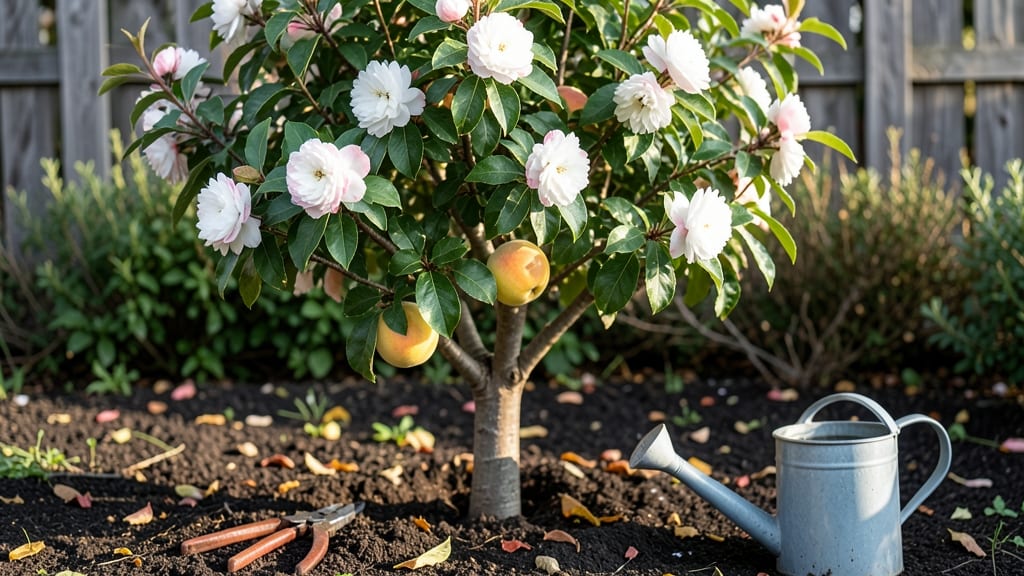
Your Snow Beauty peach tree can produce so many blossoms it bends the branches—if you trim it right during dormancy. 🌱 I learned this the hard way after my first tree sagged under a white cloud of flowers, then struggled to bear fruit.
The secret lies in shaping it while it's asleep, not waiting until spring when the damage is done.
Dormant trimming isn't about hacking branches—it's about opening the canopy so light and air reach every bud. You'll need sharp pruners, a ladder, and a clear day to work.
The goal? Remove 15-20% of last year's growth, targeting inward-growing limbs and crossing branches first. This prevents future overcrowding while keeping the tree's natural shape.
What you'll end up with is a tree that blooms spectacularly but doesn't break under the weight. The flowers stay accessible to pollinators, and the remaining branches develop stronger wood for next year's harvest.
Plus, fewer hidden branches mean fewer places for pests to hide—so your peaches stay cleaner and sweeter.
Works in zones 5-9, but adjust timing slightly if you're in a colder region—wait until hard freezes pass but before buds swell. For heavy-bearing trees, repeat this process every 2-3 years to maintain vigor. Ready to transform that snowdrift of blossoms into actual fruit?
📚 In This Guide
- What you need
- Instructions
- Tips and common mistakes
- Wrapping up and next steps
What you need
- ● Pruning shears: Bypass pruners (sharp, clean, and sterilized with rubbing alcohol or bleach solution). Quantity: 1 pair (for small branches) + 1 pair loppers (for thicker branches, 1–2 inches in diameter).
- ● Hand pruners: For precision cuts on tiny branches (1/4-inch diameter). Quantity: 1 pair.
- ● Disposable gloves: Heavy-duty, nitrile-coated (to protect against thorns and sap). Quantity: 1–2 pairs.
- ● Rubbing alcohol (70%+) or bleach solution: (1 part bleach to 9 parts water) for sterilizing tools. Quantity: Small bottle or spray bottle.
- ○ Pruning sealant (optional but recommended): Tree wound sealant (e.g., Tanglefoot Tree Wound Pruning Sealer) for cuts larger than 1/2-inch diameter. Quantity: Small jar.
- ● Marking twine or flags: (e.g., colored ribbon or stakes) to tag branches for removal. Quantity: 5–10 pieces.
- ● Bucket or tarp: For collecting pruned branches (to avoid clutter and pests). Quantity: 1.
- ● Ladder (if needed): Sturdy, extendable ladder (ensure it’s taller than the tree’s canopy). Quantity: 1 (rent if necessary).
- ● Safety glasses: To shield eyes from debris.
- ● Long-sleeve shirt/pants: Protect against thorns and sap.
- ● Sharpie or paint: To mark cuts before pruning (for clarity).
- ● Tree growth regulator: (e.g., Bonide Fruit Tree Spray) to reduce water sprouts post-pruning.
- ● Camera or phone: To document the tree’s structure before and after trimming!
How to prune a Snow Beauty peach tree for maximum blooms
Here's the method I trust to keep my Snow Beauty peach tree thriving and bursting with spring blossoms.
✂️ Step 1: Time Your Cut for Dormant Season
Prune your Snow Beauty peach tree during late winter to early spring, before buds swell but while the tree is still dormant. This timing ensures you remove dead wood while preserving next season's bloom potential. I aim for February to March in most climates, when temperatures average 40-50°F—cold enough to keep the tree dormant but warm enough to work comfortably.
Here's the thing—if you prune too early, you risk exposing tender wood to late frosts. Too late, and you'll cut off potential blooms before they form. Watch for buds that look swollen but haven't broken open—that's your cue the tree is ready. I mark the date on my calendar after the last frost warning passes, so I don't forget.
🪴 Step 2: Gather Your Tools and Safety Gear
You'll need sharp pruning shears for small branches, loppers for thicker limbs up to 2 inches in diameter, and a pruning saw for anything larger. I always sterilize my tools with rubbing alcohol before starting to prevent spreading disease between cuts. Don't skip this—peach trees are particularly susceptible to bacterial canker if tools aren't clean.
Wear gloves to protect your hands from thorns and safety glasses—peach tree branches can snap unpredictably. I keep a bucket of soapy water nearby to clean tools between cuts. This prevents sap buildup that can slow healing. Real talk: I've learned the hard way that skipping tool maintenance leads to jagged cuts that heal poorly and invite pests.
✂️ Step 3: Remove Dead, Diseased, or Crossing Branches First
Start by eliminating any dead or diseased wood—these branches won't produce fruit and can spread problems to healthy parts of the tree. Look for branches that are brown and brittle or ooze dark sap. Cut these back to healthy green wood or the nearest outward-facing bud. I make my cuts at a 45-degree angle, about ¼ inch above the bud, to encourage water to run off and prevent rot.
Next, remove crossing or rubbing branches—these create wounds where disease can enter. If two branches grow toward each other, the one with the weaker attachment (usually the smaller one) should go. You'll see these as places where bark is worn away or where branches appear to be in conflict. Don't overthink it—your goal is to open the tree's center to better airflow and sunlight.
☀️ Step 4: Thin Out Overcrowded Branches for Light Penetration
Peach trees bloom best when sunlight reaches all branches. Thin out too-dense growth by removing one-third of the thinnest branches, focusing on those growing inward. I aim to create an open vase shape, with branches spaced 8-12 inches apart on the main scaffold. This prevents shading and improves fruit quality. Watch for branches growing straight up—these rarely produce fruit and should be pruned out entirely.
Here's where it gets fun—watch how the tree's structure opens up as you work. You'll see sunlight hitting the center for the first time in years. I like to step back every few cuts to visualize the tree's shape. If a branch is too large to remove cleanly, make three cuts: first to remove the bulk, then a second to clean up the stub, and a third to smooth the bark. This prevents tearing and leaves a smaller wound that heals faster.
⏰ Step 5: Shape for Future Growth and Bloom Loads
Finally, shape the tree to support heavy bloom loads by promoting strong scaffold branches. Select 4-6 main branches growing outward from the trunk and prune others back to encourage these leaders. I cut back last year's growth by one-third on these branches to stimulate new, fruiting wood. This ensures the tree has energy to produce both flowers and fruit without breaking under the weight.
Don't forget to prune suckers—those vigorous shoots growing from the base or trunk. Remove them completely at ground level. They drain energy from the main tree and rarely produce quality fruit. Once you're done, clean up all debris from the pruning site to reduce disease risk. I rake up fallen leaves and branches and dispose of them in the trash—not the compost pile—because peach tree debris can harbor fungal spores.
Tips & tricks for perfect Snow Beauty peach tree pruning
These simple tricks will help you transform your Snow Beauty peach tree into a blooming powerhouse year after year.
Timing is Everything: The February to March window is your sweet spot for pruning, but don't stress about exact calendar dates. Instead, focus on the 40-50°F temperature range and those swollen-but-not-open buds. I've missed the perfect window before, and while the tree survives, you'll notice fewer blooms the following spring. Between us, I now set a reminder for when my local weather service predicts the last frost warning—it's become my pruning cue.
Tool Maintenance Matters: That bucket of soapy water isn't just for cleanup—it's your secret weapon against disease. I sterilize my tools with rubbing alcohol before each cut, and I clean them between every branch when working with multiple trees. The difference in wound healing is dramatic. Real talk: I've seen peach trees develop bacterial canker from contaminated tools, and once it's there, it's nearly impossible to eradicate. Don't make my mistake of skipping this step.
Visualize Your Tree's Future: Before making any cuts, step back and imagine how sunlight will reach the center of your tree. In Step 4, when you're thinning branches, aim to create that open vase shape with branches spaced 8-12 inches apart. I like to sketch a rough diagram on paper first—it helps me visualize where each cut should go. This approach prevents over-pruning and ensures your tree maintains its structural integrity while maximizing bloom potential.
Sucker Management Strategy: Those suckers growing from the base might look harmless, but they're energy vampires. Remove them completely at ground level, and don't leave any stubs. I've seen homeowners let them grow for a season, only to find their main tree's fruit production suffers. Think of suckers as weeds—they might look decorative, but they're stealing nutrients from your tree's primary structure. Make it a habit to check for new suckers every time you prune.
Pro Tips for Snow Beauty Peach Tree
- These simple tricks will help you transform your Snow Beauty peach tree into a blooming powerhouse year after year.
- Timing is Everything: The February to March window is your sweet spot for pruning, but don't stress about exact calendar dates.
- Tool Maintenance Matters: That bucket of soapy water isn't just for cleanup—it's your secret weapon against disease.
Frequently asked questions
When is the best time to prune a Snow Beauty peach tree for heavy blooms?
The ideal window is late winter or early spring—before buds swell but after the worst cold snaps (typically February to March in most climates). This ensures the tree isn’t stressed by late frosts while still allowing it to focus energy on flowering. Avoid pruning in fall, as new growth won’t harden off before winter.
Can I prune my Snow Beauty peach tree in winter when it’s dormant?
Yes! Dormant pruning (while the tree has no leaves) is perfect for shaping and removing dead wood. However, avoid heavy pruning in freezing temps (<32°F/0°C)—wait until temperatures stabilize above freezing. Cold weather can shock the tree, delaying spring bloom production. Think of it as a light trim, not a full makeover.
What if my Snow Beauty peach tree isn’t blooming much after pruning?
Heavy blooms rely on a balance: too much pruning = fewer flowers, but too little = overcrowding. Aim to remove 15–25% of the canopy—focus on thinning out dense branches and opening the center for sunlight. If blooms are sparse, check for nutrient deficiencies (like zinc) or pests (like peach tree borers) that might stress the tree.
Should I use sharp shears or a saw for thick branches on my Snow Beauty peach tree?
For branches thinner than a pencil, use bypass pruners for clean cuts. For thicker branches (½ inch or wider), switch to a pruning saw—but never use hedge trimmers, as they tear bark and invite disease. Always cut at a 45° angle just outside the branch collar to promote faster healing.
Are there alternatives to pruning if my Snow Beauty peach tree is young or small?
Young trees (<3 years old) need minimal pruning—just remove dead, crossing, or diseased branches. For small trees, focus on structural shaping (like selecting 3–5 main scaffold branches) and air circulation to prevent fungal issues. If blooms are your goal, avoid heavy cuts until the tree is established—patience pays off with bigger, healthier flowers!
Wrapping up and next steps
Mastering the art of dormant trimming your Snow Beauty peach tree isn’t just about pruning—it’s about unlocking its full potential! By following these secrets, you’ll ensure a bountiful bloom and healthier fruit while keeping your tree strong and vibrant. Remember, patience and precision pay off—your tree will thank you with stunning blossoms and delicious peaches! 🌸✂️
Ready to transform your pruning game? Grab your tools and schedule a dormant season session—your Snow Beauty peach tree’s best chapter starts now! Start planning your pruning calendar today.