
Trees
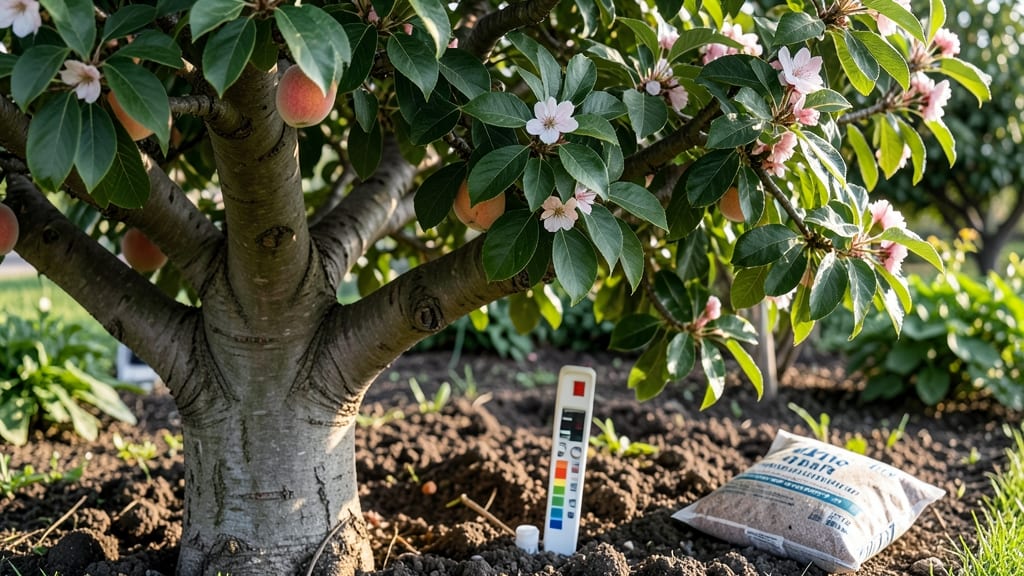
Peach trees refuse to thrive when soil pH drifts outside their sweet spot—6.0 to 7.0—and that’s exactly where I learned the hard way. My first tree produced tiny, sour fruit because the soil was too alkaline, and the leaves looked like they’d been dusted with chalk.
The fix was simple once I understood how pH affects nutrient uptake, but I wish I’d known sooner.
Testing your soil’s pH is the first step, and it’s easier than you’d think. Grab a $10 test kit from the garden center, take a sample from where the tree’s roots spread (about 6 inches deep), and follow the instructions.
If the pH reads below 6.0, you’ll need to raise it with pelletized lime; if it’s above 7.0, elemental sulfur will bring it down. Both take time—3 to 6 months for noticeable changes—but the patience pays off in juicy, flavorful fruit.
When pH is just right, your peach tree will show you with deep green leaves, steady growth, and blossoms that don’t fall off like confetti. The key is checking pH every 2 to 3 years, especially if your area has heavy clay or sandy soil.
A little maintenance now means bigger harvests later, and no more biting into a peach that tastes like disappointment.
Regional tweaks matter too—southern gardens often need sulfur more than lime, while northern soils might already be acidic. Watch for signs like yellowing leaves (too acidic) or stunted growth (too alkaline), and adjust gradually.
Once you’ve got the pH dialed in, your tree will reward you with fruit so sweet, your neighbors will ask for cuttings.
📚 In This Guide
- What you need
- Instructions
- Tips and common mistakes
- Wrapping up and next steps
What you need
- ● Soil pH Test Kit: Digital or liquid test kit (e.g., LaMotte Soil pH Test Kit or MySoil pH Meter).
- ● Garden Gloves: Heavy-duty, nitrile-coated (1 pair).
- ● Trowel or Soil Scoop: Stainless steel, 6–8 inches long (1 unit).
- ● Lime (for raising pH): Quicklime (calcium oxide) – Use sparingly (0.5–1 lb per 100 sq ft).
- ● Garden lime (calcium carbonate) – Best for peach trees (5–10 lbs per 100 sq ft).
- ● Dolomitic lime (calcium + magnesium) – Ideal for deficient soils (5–10 lbs per 100 sq ft).
- ● Sulfur (for lowering pH): Elemental sulfur or aluminum sulfate (1–2 lbs per 100 sq ft).
- ● Watering Can or Hose: With adjustable nozzle for even distribution.
- ● Measuring Tape or Ruler: To mark application areas (1 unit).
- ○ Compost or Organic Matter: Well-aged compost (5–10 gallons per tree, optional but recommended).
- ● Soil Amendments: Peat moss or pine bark fines (to improve drainage and acidity).
- ● pH Buffer Solution: For recalibrating test kits (if using liquid tests).
- ● Garden Calculator App: To determine exact lime/sulfur quantities based on soil volume.
- ● Mulch: Wood chips or straw (2–3 inches thick) to retain moisture and stabilize pH.
How to test and adjust soil pH for healthy peach trees
Peach trees thrive when soil pH is just right—here's how to check and tweak it for maximum fruit production.
Test Your Current Soil pH
Grab a soil pH testing kit (available at garden centers) and collect samples from 6 inches deep around the tree's drip line. Mix 5-6 soil cores into one composite sample for accuracy. Moisten the soil slightly with distilled water if the test requires it—tap water's minerals can skew results.
Follow the kit instructions carefully. Most test strips or meters give results in minutes. For peaches, aim for a slightly acidic range of 6.0 to 6.5. If your reading is below 5.5 or above 7.0, you'll need adjustments. I've seen trees struggle with poor fruit set when pH drifts outside this range—even by half a point.
Choose the Right Amendment for Your pH
For acidic soil (pH below 6.0), sprinkle elemental sulfur evenly over the root zone. Work it into the top 3 inches of soil using a garden fork. Start with 1 pound per 100 square feet—too much can make the soil too acidic. Water thoroughly after applying to help it dissolve.
If your soil is alkaline (pH above 6.5), use pelletized lime (calcium carbonate) instead. Apply 5-10 pounds per 100 square feet, depending on how far above 6.5 your pH is. Broadcast it evenly and rake it into the top inch. Avoid powdered lime—it can clump and burn roots.
Apply Amendments and Monitor Results
Spread the amendment 6-8 inches away from the tree trunk to avoid damaging roots. Water deeply to help it integrate into the soil. It takes 2-3 months for pH changes to become effective, so don't retest immediately. Mark your test location with a stake so you remember where you sampled.
After 3 months, retest the soil. Peach trees are sensitive to sudden pH shifts, so aim for gradual changes of no more than 0.5 pH points per season. If your first adjustment didn't get you close enough to 6.0-6.5, repeat the process with a slightly smaller amount of amendment.
Maintain Ideal pH Yearly
Peach trees prefer consistent pH levels, so test annually in early spring before new growth begins. Young trees (under 3 years old) need more frequent checks—every 6 months—because their root systems are still developing and can't buffer pH swings as well.
Here's the thing—organic matter (like compost) naturally helps stabilize pH over time. Spread 2-3 inches of compost annually around the drip line and work it into the top 2 inches of soil. This won't change pH drastically, but it improves soil structure and microbial activity, which indirectly supports healthy pH balance.
Tips & tricks for perfect peach tree soil pH balance
These practical insights will help you avoid common pitfalls and get your peach trees thriving with just the right soil acidity.
Sampling Precision: When collecting your 5-6 soil cores from 6 inches deep, focus on the drip line—not the trunk area. The drip line represents where most root activity occurs, giving you the most accurate reading. I've seen gardeners accidentally sample too close to the trunk and get misleading results because surface soil there can be more compacted and less representative of the root zone.
Distilled Water Matters: If your pH test requires moistening the soil, always use distilled water instead of tap water. Tap water often contains minerals like calcium and magnesium that can artificially raise your pH reading by up to 0.5 points. I learned this the hard way after getting inconsistent results—now I keep a small bottle of distilled water specifically for soil testing.
Amendment Application Technique: When spreading elemental sulfur or pelletized lime, use a broadcast spreader for even distribution. Work the amendment into just the top 3 inches—deeper application won't help since most peach tree roots stay in the top 12-18 inches. I like to mark my application areas with stakes so I don't accidentally overlap treatments in future seasons.
Visual pH Tracking: Create a simple chart to track your pH adjustments over time. Note the date, your starting pH, the amendment used, and the dosage. After 3 months, record your follow-up test results. This visual record helps you spot patterns—like noticing that your soil naturally drifts toward alkaline in summer months. I've had gardeners tell me they "tried everything" without realizing their soil was actually compensating for seasonal changes.
Pro Tips for Soil Ph For Peach Trees
- These practical insights will help you avoid common pitfalls and get your peach trees thriving with just the right soil acidity.
- Sampling Precision: When collecting your 5-6 soil cores from 6 inches deep, focus on the drip line—not the trunk area.
- Distilled Water Matters: If your pH test requires moistening the soil, always use distilled water instead of tap water.
Frequently asked questions
Got questions about keeping your peach trees thriving with the perfect soil pH? You’re not alone! Here are some of the most common queries—plus straightforward answers to help you grow sweeter, healthier fruit.
What’s the ideal pH range for peach trees, and why does it matter?
The sweet spot for peach trees is a slightly acidic to neutral pH of 6.0 to 6.8. This range ensures they can absorb essential nutrients like nitrogen, phosphorus, and potassium—key for strong roots, vibrant blooms, and juicy fruit. Too acidic (<5.5) or alkaline (>7.0) can stunt growth or lead to poor yields. Think of it as the "Goldilocks zone" for your tree’s health!
How often should I test my soil pH for peach trees?
Test your soil every 2–3 years as a baseline, but check it annually if you notice yellowing leaves, stunted growth, or poor fruit production. Soil pH can shift due to rainfall, organic matter breakdown, or amendments. A quick soil test kit (or lab test) keeps you ahead of pH-related problems—like a health checkup for your tree!
What’s the fastest way to adjust soil pH for peach trees?
For lowering pH (too alkaline), mix in elemental sulfur or peat moss and water well. For raising pH (too acidic), add lime (calcium carbonate) or wood ash. Work these into the top 6–8 inches of soil in early spring or fall, giving the soil 2–3 months to stabilize. Pro tip: Test again after 60 days to avoid overcorrecting!
My peach tree leaves are yellow—could it be pH-related?
Yellowing leaves (especially with green veins) often signal iron or manganese deficiency, common in alkaline soils (pH >7.0). If the soil is too acidic (<5.5), roots may struggle to take up nutrients like phosphorus. First, test your pH. If it’s off, amend the soil and fertilize with a chelated iron or micronutrient supplement for a quick boost.
Are there natural ways to maintain soil pH without chemicals?
Use compost, pine needles (acidifying), or crushed eggshells (alkaline) to gently adjust pH over time. Cover crops like clover or vetch also improve soil structure and microbial activity, which naturally balances pH. Just be patient—organic methods take longer but build long-term soil health. Think of it as a slow-cooked stew for your soil!
When’s the best time to adjust soil pH for peach trees?
Plan amendments in early spring (before buds swell) or fall (6–8 weeks before frost). Avoid adjusting pH during peak growing seasons, as sudden changes can stress the tree. Fall is ideal because cooler temps help the soil absorb changes gradually. Pro tip: Water thoroughly after amending to help distribute materials evenly.
Wrapping up and next steps
Getting your soil pH just right is the secret ingredient for thriving peach trees! 🌱 Aim for a range of 6.0 to 7.0—this ensures your trees absorb nutrients efficiently, leading to sweeter, healthier fruit and fewer pests or diseases.
With the right tools and a little patience, you’ll be well on your way to a bountiful harvest.
Ready to take action? Test your soil today and adjust as needed—your future peach pies will thank you! 🍑✨