
Pruning
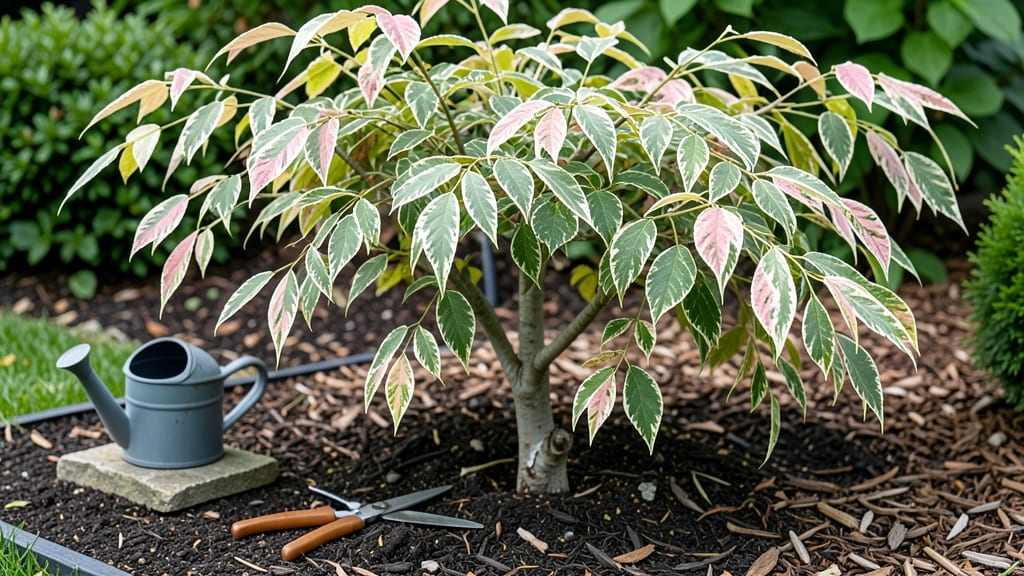
The tri-color dappled willow tree transforms any garden into a living watercolor painting with its shimmering gold, pink, and cream foliage. 🌿 I planted mine near a small pond last spring, and the way the leaves catch the sunlight at dusk creates this magical, ever-changing glow that neighbors comment on constantly.
The secret to keeping those vibrant colors isn't just water or sunlight—it's understanding when and how to prune to encourage fresh, colorful growth.
This tree thrives as a dramatic focal point or woven into mixed borders where its cascading branches soften edges. Pair it with hostas for contrast, or let it anchor a Japanese-inspired garden with maples and azaleas.
The key is placement: it loves moist soil and partial shade, making it perfect for rain gardens or near water features where its weeping habit adds movement. Most gardeners overlook its winter interest too—those same dappled leaves turn soft gold in cold months, providing year-round texture.
With just three seasonal pruning sessions, you'll maintain that showstopping foliage while controlling its size. The first cut in late winter removes dead wood, the summer trim shapes new growth, and a final light prune in fall keeps it tidy without sacrificing next year's color.
What you'll end up with is a tree that looks like it belongs in a botanical garden, not your backyard—yet it's surprisingly low-maintenance once you get the rhythm right.
Works equally well in cottage gardens, modern landscapes, or even as a striking container specimen. The only rule? Give it space to stretch its legs—this isn't a tree for small yards, but in the right setting, it becomes the centerpiece that makes your garden unforgettable.
Let's talk placement and pruning secrets next.
📚 In This Guide
- What you need
- Instructions
- Tips and common mistakes
- Wrapping up and next steps
What you need
- ● Pruning shears: Sharp, bypass-style shears (for clean cuts on small branches). Quantity: 1 pair.
- ● Loppers: For thicker branches (½" to 1" diameter). Quantity: 1 pair.
- ● Hand pruners: For precision cuts on tiny twigs. Quantity: 1 pair.
- ● Pruning saw: For stubborn, larger branches (if needed). Quantity: 1.
- ● Disinfectant: 70% isopropyl alcohol or pruning sealant (to prevent disease spread). Quantity: Small bottle.
- ● Gloves: Heavy-duty gardening gloves (for protection). Quantity: 1 pair.
- ● Safety goggles: To shield eyes from debris. Quantity: 1 pair.
- ● Trash bags: For collecting pruned branches. Quantity: 2-3.
- ○ Ladder (optional but helpful): If your willow is tall (6+ feet). Type: Sturdy, extendable.
- ● Pruning paint: For sealing larger cuts (prevents moisture loss).
- ● Tree wound dressing: Speeds up healing on major pruning wounds.
- ● Notebook & pen: To track pruning dates and growth patterns.
- ● Mulch: Organic mulch (2-3 inches) to retain moisture post-pruning.
Step-by-Step guide for pruning a tri-color dappled willow tree
Here's the seasonal approach I've used to keep my willow's stunning foliage vibrant all year.
✂️ Step 1: Early Spring Cleanup (Late February to Early March)
Start by removing all dead, diseased, or crossing branches first. These are easy to spot—they're brown, brittle, or growing inward. Use sharp pruning shears to make clean cuts just outside the branch collar where the branch meets the trunk. This prevents unsightly stubs and promotes faster healing.
Next, thin out any overly dense growth from the center of the tree. Look for branches that rub against each other or create crowded spots. Removing about 20-25% of the total branches opens up airflow and sunlight, which is crucial for maintaining that vibrant tri-color foliage. The goal is to create an open vase shape that lets light penetrate to the inner branches.
✂️ Step 2: Summer Maintenance (June to August)
During the growing season, focus on shaping and controlling growth. After the initial flush of new growth appears, check for any branches that are growing too vigorously or spoiling the tree's natural form. You'll notice these as long, leggy shoots that stick out from the main structure.
Make your cuts just above a leaf node or bud that points in the direction you want the branch to grow. For willows, I typically reduce new growth by about one-third to encourage bushier, more compact development. Avoid heavy pruning during summer—just light shaping keeps the tree healthy without stressing it before winter.
✂️ Step 3: Late Summer to Early Fall Renewal (September to October)
This is the time to encourage new growth that will develop vibrant fall colors. Look for any branches that haven't produced new leaves or have lost their characteristic tri-color pattern. These are candidates for removal—they won't contribute to next year's display.
Reduce watering slightly in late summer to harden off new growth before winter. This prepares the tree for dormancy. You can also do a light thinning of any remaining crowded branches, but avoid heavy cuts that might stimulate late-season growth vulnerable to frost damage.
⏰ Step 4: Winter Dormancy Pruning (January)
When the tree is completely dormant, do any major structural pruning. The lack of leaves makes it easier to see the tree's natural shape and identify any dead wood. Focus on opening up the center and removing any branches that are growing in unnatural directions or creating an unbalanced silhouette.
For the tri-color dappled willow, winter pruning helps maintain the color contrast by ensuring sunlight reaches all the foliage. Make your cuts just outside the branch collar, and clean up all debris from the pruning process. This prevents disease and keeps your workspace tidy.
Tips & tricks for pruning a tri-color dappled willow tree
Here's what I've learned after years of keeping my willow's foliage vibrant—these are the little details that make all the difference.
Branch Collar Precision: When making cuts in Step 1 or Step 4, focus on the branch collar—the swollen area where the branch meets the trunk. Cutting just outside this collar prevents unsightly stubs and helps the wound heal faster. I've seen so many trees develop cankers because people cut too close or too far—don't make my mistake! The collar is nature's built-in seal that protects against disease.
Seasonal Timing Matters: The specific months in each step aren't arbitrary—they align with the tree's natural growth cycles. In late February-March (Step 1), the tree is just waking up, making it easier to see dead wood. During summer (Step 2), you're shaping new growth that's already visible. The late summer (Step 3) timing hardens off new growth before winter, while January (Step 4) lets you see the full structure without leaves blocking your view.
Visual Cues for Pruning: For Step 2's "one-third reduction," look for branches that are 1/3 longer than the surrounding growth. These are your targets—they'll create a bushier shape. In Step 3, branches without tri-color leaves are easy to spot—they'll be solid green or yellowish, not showing the characteristic variegation. These are the ones to remove to maintain that stunning color contrast.
Pro Tips for Tri Color Dappled Willow Tree
- Here's what I've learned after years of keeping my willow's foliage vibrant—these are the little details that make all the difference.
- Branch Collar Precision: When making cuts in Step 1 or Step 4, focus on the branch collar—the swollen area where the branch meets the trunk.
- Seasonal Timing Matters: The specific months in each step aren't arbitrary—they align with the tree's natural growth cycles.
Frequently asked questions
Got questions about keeping your tri-color dappled willow tree looking its best?
Here are some of the most common queries—plus quick, practical answers to help you maintain that stunning foliage year-round.
When is the best time to prune a tri-color dappled willow?
Prune your tri-color dappled willow in late winter or early spring (before new growth starts) to encourage vibrant foliage. Avoid heavy pruning in fall, as it can stimulate tender shoots that may not survive winter. Light shaping in summer is fine, but never prune after mid-summer—this can reduce hardiness.
How much can I trim back my tri-color dappled willow?
You can safely prune up to 30% of the tree’s height in one season, but avoid over-pruning. This variety responds well to shaping, so focus on removing dead, crossing, or overcrowded branches first. For dramatic results, spread pruning over 2–3 years to avoid stressing the tree.
Why are the colors fading in my willow’s leaves?
Faded colors often mean too much shade or poor nutrition. Ensure your tri-color dappled willow gets 6+ hours of sunlight daily and amend soil with compost in early spring. Yellowing leaves may also signal iron deficiency—apply a chelated iron supplement if needed.
Can I grow a tri-color dappled willow in a container?
Yes! This variety thrives in large containers (15+ gallons) with well-draining soil. Choose a fast-draining mix (like 60% potting soil + 40% perlite) and repot every 2–3 years. Pro tip: Move containers indoors during winter if temps drop below 15°F to protect roots.
What should I avoid when pruning this willow?
Avoid these pruning no-nos:
- Pruning in fall—new growth won’t harden off before winter.
- Cutting into old wood—this variety blooms on new growth, so avoid over-pruning mature branches.
- Leaving stubs—always cut back to a bud or branch collar for cleaner wounds.
Wrapping up and next steps
The tri-color dappled willow is a stunning addition to any landscape, offering year-round visual appeal with its ever-changing foliage. By mastering seasonal pruning—whether shaping in spring, thinning in summer, or cleaning up in winter—you’ll keep its vibrant hues thriving and its growth healthy. 🌿
Ready to transform your garden? Start by observing your tree’s growth patterns and pruning with confidence—small steps lead to big rewards! Grab your tools and give your dappled willow the care it deserves.