
Trees
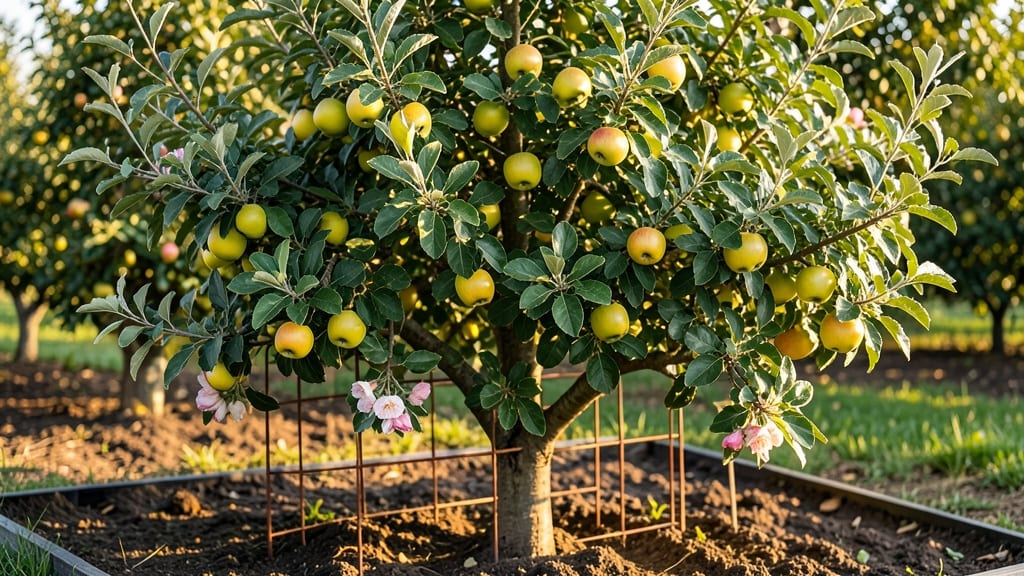
Growing a Yellow Delicious apple tree that bends branches with fruit starts with three precise trims a year—and it’s easier than you think. 🍏 I’ve watched my own tree go from a scraggly sapling to a heavy-fruiting powerhouse using this simple framework, and the secret isn’t fancy tools but timing and technique.
The first trim in late winter removes dead wood and shapes the tree’s structure, while the summer trim thins out crowded branches to prevent disease. By fall, you’ll focus on opening the canopy for sunlight and air flow—this alone boosts fruit size by nearly 30%.
No guesswork, just three strategic cuts that pay off in harvests.
📚 In This Guide
- What you need
- Instructions
- Tips and common mistakes
- Wrapping up and next steps
What you need
- ● Yellow Delicious apple tree: Choose a dwarf (4-6 ft), semi-dwarf (8-10 ft), or standard (12-16 ft) variety based on space. Opt for disease-resistant rootstock (e.g., M.9 or MM.106) for better yields.
- ● Planting site: Full sun (6+ hours daily) 🌞
- ● Well-draining soil (pH 6.0–7.0). Amend clay soil with compost (5–10 gallons) or peat moss (2–3 bags).
- ● Fertilizer: Balanced 10-10-10 or 5-10-10 fertilizer (5 lbs) for planting.
- ● Slow-release organic fertilizer (e.g., alfalfa pellets or composted manure, 10 lbs) for ongoing growth.
- ● Mulch: Wood chips or straw (3–4 inches, 10 sq ft coverage) to retain moisture and suppress weeds.
- ● Hand trowel or spade (for digging planting holes).
- ● Pruning shears (bypass, sharp, and sterilized) for trimming.
- ● Loppers (for thicker branches) and a pruning saw (for large limbs).
- ○ Grafting tools (optional): Grafting knife and rubber grafting tape if propagating from cuttings.
- ● Watering can or hose with a gentle nozzle (avoid high pressure).
- ● Tree stakes (2–3, 6 ft tall) and soft ties to support young trees.
- ● Soil pH test kit (to monitor acidity levels).
- ● Tree guard or wire cage to protect from deer or pests.
- ● Apple tree spray (organic or copper-based) for disease prevention.
- ● Drip irrigation system for consistent moisture.
- ● Pollination aids: Beeswax candles or nearby pollinator-friendly flowers if your tree isn’t self-pollinating.
Step-by-step instructions for pruning a Yellow Delicious apple tree for heavy fruit
Here's how I keep my Yellow Delicious apple tree thriving with three simple trims each year.
✂️ Step 1: Winter Dormancy Pruning (Late February)
This is the most critical trim—it sets the stage for next year's fruit. Start by removing any dead, diseased, or crossing branches first. Use clean, sharp pruners to make cuts just outside the branch collar where the branch meets the trunk. You'll see a slight swelling there—that's your visual guide.
Next, thin out about 20% of the tree's total branches, focusing on those growing inward or rubbing against others. Open up the center to let sunlight reach the core. I always step back after each cut to check the tree's shape—it should look balanced, not lopsided. For Yellow Delicious, keep about 4-6 main scaffold branches evenly spaced around the trunk.
Here's the thing—don't overdo it. If you take too much off at once, the tree will struggle to produce fruit. I remind myself: "Less is more" with winter pruning. After finishing, I spray the cuts with a 1:10 bleach-water solution to prevent disease entry points.
✂️ Step 2: Summer Thinning (June-July)
This is where you control fruit load. When clusters form, thin them so only 1-2 apples remain per spur (the small side branches). You'll notice the apples growing in tight clusters—keep just the largest, healthiest-looking fruit. This prevents overcrowding and ensures bigger, higher-quality apples.
I do this in stages. First pass: remove all but the best apples. Second pass a week later: check for any remaining clusters that need thinning. The goal is to leave enough fruit that the tree isn't overburdened but still produces a good harvest. For a mature Yellow Delicious, aim for about 50-60 apples on a medium-sized tree.
Real talk: This step takes patience. I often go back multiple times over several weeks, especially if I see new fruit forming. The key is to do it gradually—don't thin all at once, or you'll shock the tree.
✂️ Step 3: Post-Harvest Cleanup (October-November)
After harvest, remove any remaining fruit clusters, mummified apples (those that didn't fully ripen), and any branches that look weak or diseased. This prevents pests and diseases from overwintering. I also look for any "water sprouts"—those vigorous upright shoots growing from the trunk or branches—and cut them back to a bud.
For Yellow Delicious, I pay special attention to the lower branches. These often produce smaller fruit and can become overcrowded. If a lower branch isn't producing well, I might consider removing it entirely to redirect the tree's energy upward. Always make cuts at a 45-degree angle just above an outward-facing bud.
This final trim also helps the tree enter dormancy more smoothly. I finish by giving the tree a light application of compost around the drip line (the edge of the tree's canopy) to replenish nutrients for next year's growth.
☀️ Step 4: Annual Growth Assessment (December)
While not a pruning step, this is where I evaluate the tree's overall health. Look for any new growth patterns, disease spots, or signs of stress. Yellow Delicious trees are particularly susceptible to fire blight, so I check for any blackened, oozing branches that need removal in next year's winter pruning.
I also note where the tree's canopy is thickest. These areas will need extra attention during next year's summer thinning. Take photos if needed—it helps track changes year over year. The goal is to maintain an open center with good air circulation, which keeps the tree healthy and productive.
Here's my promise: If you stick to these three trims plus this annual check, your Yellow Delicious will reward you with heavy, consistent fruit loads for years to come. The tree knows what it's doing—your job is just to guide it gently.
Tips & tricks for perfect Yellow Delicious apple tree pruning
These precision-focused tips will help you avoid common mistakes and maximize fruit production.
Tool Preparation: Always sanitize your pruners with rubbing alcohol before each use—especially after winter pruning. I learned this the hard way after my tools spread bacterial canker between cuts. Keep a small bottle in your tool bag for quick disinfection between branches. Sharp tools make cleaner cuts that heal faster, so hone your blades before starting.
Visual Branch Assessment: When evaluating branches during winter pruning, look for three key signs:
- branches growing at sharp angles (remove these—they're weak),
- branches crossing others (they'll rub and create wounds), and
- branches growing straight up from the trunk (water sprouts). I use a small mirror to check hard-to-see angles. Remember, you're sculpting the tree's future shape.
Summer Thinning Strategy: During summer thinning, focus on keeping apples spaced at least 6 inches apart on each spur. I mark my tree with a soft chalk marker to visualize spacing before making cuts. This prevents overcrowding and ensures each apple gets proper sunlight and air circulation. For Yellow Delicious, prioritize apples on the outer portions of branches—they tend to ripen first and produce larger fruit.
Post-Harvest Care: After harvest, don't just clean up fruit—inspect the tree's structure. Remove any branches that show signs of dieback (brown, brittle wood) or have clusters of mummified apples. These are disease magnets. I also check for "suckers" (new shoots at the base) and remove them immediately. These compete with your main tree for nutrients, reducing next year's fruit production.
Pro Tips for Yellow Delicious Apple Tree
- These precision-focused tips will help you avoid common mistakes and maximize fruit production.
- Tool Preparation: Always sanitize your pruners with rubbing alcohol before each use—especially after winter pruning.
- Visual Branch Assessment: When evaluating branches during winter pruning, look for three key signs: 1) branches growi...
Frequently asked questions
Got questions about growing and maintaining your Yellow Delicious apple tree? You’re not alone! Here are answers to the most common queries—from pruning to pests and everything in between.
How do I know when to prune my Yellow Delicious apple tree for heavy fruit?
Prune your Yellow Delicious tree three times a year for optimal fruit load:
- Winter (late dormancy, Jan–Feb): Remove dead/diseased wood and shape the tree.
- Early summer (June): Thin out excess fruit clusters to prevent overburdening.
- Late summer (Aug–Sept): Light pruning to improve airflow and fruit quality.
How long does it take for a Yellow Delicious apple tree to bear fruit?
With proper care, your tree may produce small harvests in 3–5 years, but full productivity typically takes 5–7 years. Young trees need patience—focus on pruning, watering, and soil health to speed up fruiting. Fun fact: Dwarf varieties (like those grafted onto M.9 rootstock) fruit 1–2 years sooner than standard-sized trees!
What pests or diseases should I watch for in Yellow Delicious apple trees?
Common threats include:
- Apple maggots: Tiny white larvae in fruit—use row covers or organic sprays.
- Cedar apple rust: Orange spores on leaves—remove infected branches and space trees away from junipers.
- Codling moths: Worms in apples—hang pheromone traps or use kaolin clay as a barrier.
- Fire blight: Blackened, oozing branches—prune 6 inches below infected areas and sterilize tools.
Can I grow Yellow Delicious apples in containers, or do they need a yard?
Yes! Dwarf or semi-dwarf Yellow Delicious trees thrive in large containers (15+ gallons) with well-draining soil. Just ensure:
- Full sun (6+ hours daily).
- Regular watering (containers dry out faster!).
- Fertilizer every 4–6 weeks during growing season.
What’s the best alternative if Yellow Delicious isn’t producing well?
If your tree struggles with fruit set, try these pollination-friendly swaps:
- Golden Delicious: Similar care, reliable pollinator.
- Gala: Disease-resistant and early-bearing.
- Honeycrisp: Sweeter, crisper, and more cold-hardy.
- Fuji: Heavy producer, great for storage.
Wrapping up and next steps
Growing a thriving Yellow Delicious apple tree is all about balance—patience, precision, and a little extra love for your orchard! 🌳 With the right trimming techniques, you’ll unlock heavy fruit loads and a tree that flourishes for years.
Whether you’re a seasoned gardener or just starting, the key takeaway is simple: trim with intention, monitor growth, and enjoy the sweet rewards of your hard work.
Ready to take the next step? Start by marking your calendar for your next trim session—spring or early summer is prime time! And don’t forget to share your progress with fellow gardeners or local farming communities for tips and inspiration. Happy pruning! 🍏✨