
Pruning
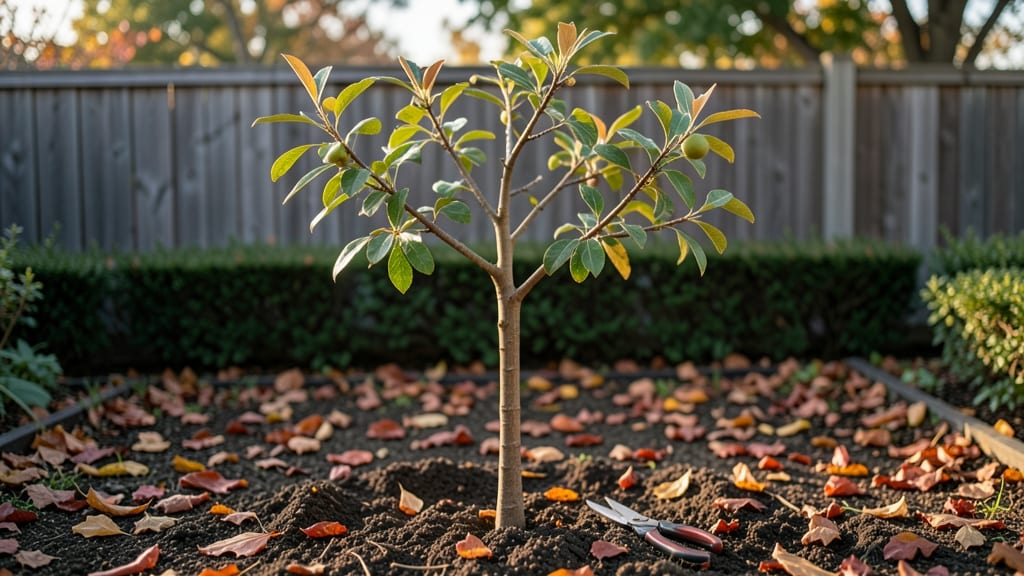
The first spring after planting a young persimmon tree determines its future fruitfulness. ✂️ I learned this the hard way when my first tree grew lopsided branches that never produced well—until I corrected the shape in its second spring.
Pruning isn’t about cutting randomly; it’s about guiding the tree’s energy toward strong structure and future harvests.
You’ll need sharp pruning shears, a clean cutting surface, and about 30 minutes of focused work. The goal is simple: remove crossing branches, water sprouts, and any growth that competes with the main scaffold.
Persimmons respond well to pruning when done in late winter or early spring, before new growth begins.
What you’ll end up with is a tree that develops a balanced canopy, stronger limbs, and better air circulation—all of which lead to healthier fruit. The key is making cuts just outside the branch collar, never leaving stubs.
With the right approach, your young persimmon will reward you with abundant harvests in just a few seasons.
This method works for both Asian and American persimmon varieties, though timing may vary slightly by climate. Warmer regions can prune a bit later, while colder areas should finish by early March. The principles remain the same: shape, airflow, and future fruit potential.
📚 In This Guide
- What you need
- Instructions
- Tips and common mistakes
- Wrapping up and next steps
What you need
- ● Pruning shears: Bypass pruners (sharp, clean, and sterilized with rubbing alcohol) for cuts under ½ inch thick.
- ● Loppers: 1 pair (for branches ½–1½ inches thick). Look for bypass blades for precision.
- ● Pruning saw: 1 handheld saw (for branches thicker than 1½ inches). A bow saw or pruning saw works best.
- ● Disposable gloves: 1 pair (nitrile or leather) to protect hands from thorns and sap.
- ● Rubbing alcohol (70% or higher): Small bottle (4 oz) for sterilizing tools between cuts.
- ○ Sealing wax or pruning sealant: Small tube (optional but recommended for cuts larger than ½ inch).
- ● Marking twine or tape: 1 roll (for tagging branches to remove later).
- ● Bucket or bag: 1 (for collecting pruned branches).
- ● Ladder (if needed): Sturdy step ladder or extension pole (ensure it’s tall enough for your tree’s height).
- ● Hand sanitizer: Small bottle for post-pruning clean-up.
- ● Tree wound paint: Alternative to sealant (follow label instructions).
- ● Notebook & pen: To sketch your tree’s structure before/after trimming.
- ● Safety glasses: If working near your face or eyes.
Step-by-Step instructions for spring trimming a young persimmon tree
Here's how to shape your tree for strong structure and future fruit—without overdoing it.
✂️ Step 1: Remove Dead or Crossing Branches First
Start by inspecting the tree for any branches that are completely brown and brittle—these are dead and need removal. Use sharp pruning shears to cut just outside the branch collar (the swollen area where the branch meets the trunk). This prevents unsightly stubs and promotes faster healing.
Next, look for branches that are rubbing against each other or growing inward. These will eventually damage each other or create weak entry points for disease. Cut the smaller of the two branches at its base, making a clean cut at a 45-degree angle about ¼ inch above a bud facing outward.
Real talk: If you're unsure which branch to remove, take a photo first. Overthinking this step can lead to unnecessary cuts, so prioritize branches that are clearly crossing or damaged.
🌿 Step 2: Thin Out Overcrowded Branches for Airflow
Persimmon trees thrive when sunlight and air circulate freely through the canopy. Look for clusters of branches growing too close together—aim to leave 6-8 inches of space between them. Remove the weakest or smallest branch in each cluster, cutting back to the branch collar or a strong lateral bud.
Here's the thing—you don’t need to remove every extra branch at once. Focus on the lower third of the tree first, as this encourages a stronger trunk and reduces future cleanup. Leave 3-5 main scaffold branches evenly spaced around the trunk to form the tree’s framework.
Watch for branches growing straight upward (called "water sprouts"). These compete with the tree’s main structure for energy. Snip them off at the base—they’ll regrow, but you’ll have a stronger tree if you remove them early.
☀️ Step 3: Prune for Light Penetration and Fruit Development
Now, shift your focus to the outer canopy. Persimmon trees produce fruit on new wood, so you’ll want to encourage growth on the outer branches. Trim back any branches that are growing too densely inward or blocking sunlight from reaching the center of the tree.
Cut just above a bud that faces outward—this ensures new growth will fill gaps rather than shade the interior. Avoid "heading back" (cutting back to a lateral branch) unless you’re shaping a specific branch. For young trees, light thinning is better than heavy pruning—you’re shaping, not renovating.
If your tree has long, leggy branches, shorten them by one-third to encourage bushier growth. You’ll see new leaves and buds forming within 2-3 weeks—that’s your signal the tree is responding well.
⏰ Step 4: Clean Up and Apply Wound Treatment
After pruning, rake up all the clippings and debris from the base of the tree. This reduces pests and diseases that can hide in fallen branches. Dispose of diseased or heavily infested branches separately—do not compost them near your tree.
For larger cuts (over ½ inch in diameter), apply pruning sealant to the wound to prevent moisture loss and infection. For smaller cuts, skip the sealant—persimmon trees heal quickly in spring’s warmer temperatures, and sealant can sometimes trap moisture.
Water the tree deeply after pruning to help it recover. You’ll know it’s happy when new leaves emerge within 10-14 days—that’s your reward for a job well done.
Tips & tricks for spring trimming a young persimmon tree
Here's what nobody tells you about shaping your persimmon tree for long-term health.
Tool Prep: Sharpen your pruning shears before you start—dull blades tear bark and create larger wounds. I test mine on a scrap piece of wood first; if it doesn't cut cleanly, it's not ready. Also, wear gloves to protect against sap and thorns, and bring a small bucket for clippings. This keeps your workspace tidy and prevents accidental cuts.
Visual Cues for Step 1: When removing crossing branches in Step 1, look for the "V" shape where two branches meet. The branch that grows more vertically is usually the stronger one to keep. For dead branches, snap test a small twig—if it snaps cleanly and doesn't bend, it's dead. This simple test saves time and prevents unnecessary cuts.
Scaffold Branch Strategy: In Step 2, those 3-5 main scaffold branches should be spaced like clock hands—about 25-30 degrees apart around the trunk. This creates an open center that lets sunlight reach the ground, encouraging new growth from the base. I like to visualize an upside-down cone shape when planning my cuts.
Season Timing: The 10-14 day window for new leaf growth mentioned in Step 4 assumes you're pruning in early spring when temperatures are consistently above 40°F. If you're in a colder climate, wait until after the last frost and when buds are just starting to swell. This timing ensures your tree can recover quickly before summer heat arrives.
Pro Tips for Young Persimmon Tree
- Here's what nobody tells you about shaping your persimmon tree for long-term health.
- Tool Prep: Sharpen your pruning shears before you start—dull blades tear bark and create larger wounds.
- Visual Cues for Step 1: When removing crossing branches in Step 1, look for the "V" shape where two branches meet.
Frequently asked questions
Got questions about nurturing your young persimmon tree?
Here are some of the most common ones—plus quick, actionable answers to keep your tree thriving!
When is the best time to prune a young persimmon tree?
Prune your young persimmon tree in late winter or early spring (before buds swell) for balanced growth. Avoid heavy pruning in fall—it can stress the tree. Light shaping in summer (after fruiting) is fine, but prioritize winter/early spring for major cuts. Pro tip: Use sterilized tools to prevent disease!
How much can I trim off a young persimmon tree?
For the first 2–3 years, limit pruning to 15–20% of the tree’s foliage to avoid shock. Focus on removing:
- Dead, diseased, or crossing branches
- Suckers at the base
- Weak growth competing with the main structure
What if my persimmon tree isn’t growing after pruning?
Slow growth after pruning often means root damage, poor soil, or over-trimming. Check for:
- Compacted or nutrient-poor soil (amend with compost!)
- Root girdling from circling roots (gently loosen if needed)
- Pests like borers (look for sawdust-like frass)
Can I use the same pruning techniques for other fruit trees?
While persimmons share basics with other fruit trees (like apples or peaches), they’re more sensitive to heavy pruning. Avoid aggressive "open-center" shaping—persimmons thrive with a vase or central leader form. For alternatives, research tree-specific guides, but always:
- Prune in dormant season
- Remove water sprouts
- Thin branches for airflow
What should I avoid when pruning a young persimmon tree?
Steer clear of these pruning no-nos:
- Topping: Cutting the main stem flat—it encourages weak growth.
- Pruning in wet weather: Spreads disease (wait for dry, calm days).
- Leaving stubs: Always cut just outside the branch collar.
- Over-fertilizing after pruning: New growth is vulnerable to pests.
Wrapping up and next steps
Growing a thriving young persimmon tree is all about patience, precision, and a little love! By mastering the art of spring pruning, you’re setting the stage for a tree that’s not only healthy but also loaded with delicious fruit.
Remember: less is more—focus on removing dead branches, shaping for airflow, and encouraging strong growth.
Ready to take the next step? Mark your calendar for early spring and grab your pruning tools—your persimmon tree will thank you with vibrant blooms and sweet rewards in the seasons ahead! 🌱✨