
Pruning
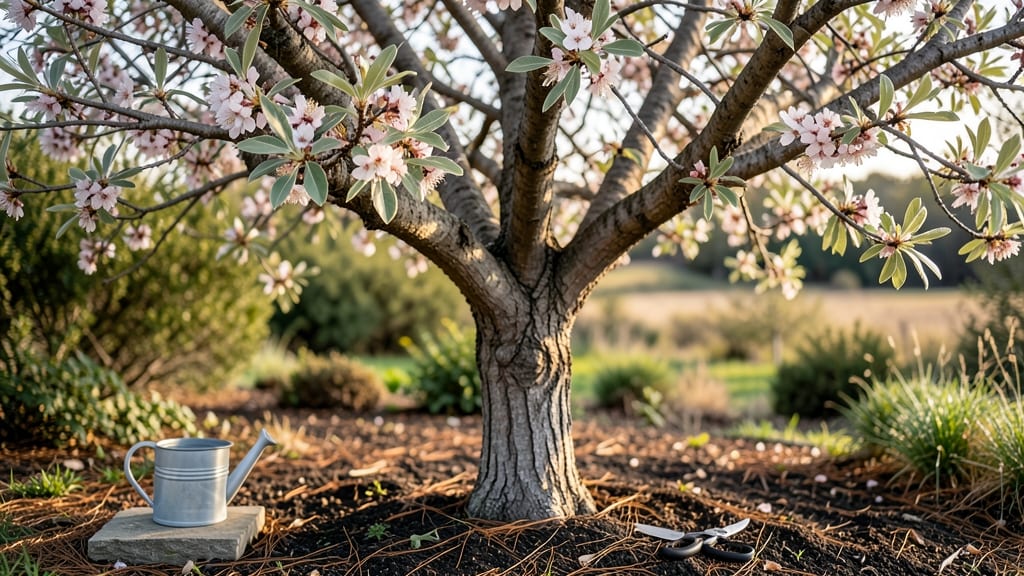
Almond trees thrive in Arizona’s frost-free winters, but dormant season pruning is your secret weapon for heavy fruit loads—if you time it right.
I’ve watched my own trees go from sparse harvests to bursting branches by mastering this one critical window between January and February, when the desert air stays crisp but the buds haven’t yet swelled.
The key isn’t just cutting back—it’s shaping the tree to handle Arizona’s intense sun and unpredictable rains while maximizing those prized nuts.
You’ll need sharp bypass pruners, a ladder (for mature trees), and a clear day when temps stay below 60°F—no Arizona heatwave in sight. Start by removing dead wood first; those branches won’t produce, and they’re just stealing energy.
Then focus on opening the canopy to improve airflow, which cuts down on fungal risks like anthracnose that love our monsoon humidity. For young saplings, keep it simple: just trim to encourage a strong central leader, but don’t overdo it—these trees need their energy for root growth.
What you’ll end up with is a tree that looks like a well-oiled machine: sunlight reaches every branch, water runs off instead of pooling, and next spring’s blossoms will be so abundant you’ll need a net.
The payoff comes in late summer when those shells split open, revealing almonds that taste sweeter than anything you’ve ever bought at the store. And here’s the best part—this method works whether you’re in Phoenix’s brutal heat zone or the cooler high desert near Flagstaff.
Pro tip: Save your pruned branches for rooting cuttings or mulch—nothing goes to waste in an Arizona almond orchard. Once you’ve nailed this dormant season routine, you’ll see why local growers swear by it. Ready to transform your tree into a nut-producing powerhouse?
📚 In This Guide
- What you need
- Instructions
- Tips and common mistakes
- Wrapping up and next steps
What you need
- ● Pruning shears: Bypass shears (for cuts 2–3 pairs (one per person if working in a team).
- ● Loppers: 6–8” bypass loppers (for 1–2” branches) – 1–2 per person.
- ● Pruning saw: Curved-tooth saw (for branches >2” thick) – 1 per 2–3 people.
- ● Extension pole: 6–10’ telescoping pole with saw attachment (for high branches).
- ● Ladder: Sturdy, 24–32’ extension ladder (rated for your weight + tools). Safety first!
- ● Work gloves: Heavy-duty, cut-resistant gloves (e.g., Mechanix or similar).
- ● Safety gear: Goggles, ear protection (if using a chainsaw), and long sleeves/pants.
- ● Disinfectant: 70% isopropyl alcohol or 10% bleach solution (to sterilize tools between cuts).
- ○ Pruning sealant: Optional but helpful for cuts >½” (e.g., Tanglefoot Tree Wound Pruning Seal).
- ● Mulch: Wood chips or straw (2–3” layer around base after pruning).
- ● Watering can/hose: For post-pruning hydration (Arizona’s dry air demands it!).
- ● Trash bags: Heavy-duty bags (20–30 gallon) for debris disposal.
- ● Weather check: Prune on a dry, cool day (40–60°F) to avoid fungal risks.
- ● Tree health assessment: Inspect for pests/disease (e.g., aphids, codling moth) before pruning.
- ● Permits: Check with your Arizona Department of Agriculture if pruning commercial groves.
- ● Team coordination: Assign roles (e.g., climber, saw operator, spotter) for safety.
Step-by-step guide for pruning almond trees in Arizona’s dormant season
Here’s how I shape almond trees for maximum fruit production—without stressing the tree.
Time Your Pruning for Arizona’s Ideal Window
Prune your almond tree in late winter to early spring, just as buds begin to swell but before new growth starts. In Arizona’s climate, this typically falls between mid-February and early March, when daytime temperatures hover around 60-65°F. Pruning too early risks frost damage to fresh cuts, while waiting too long encourages early bud break, which weakens the tree.
Check the buds daily—when you see small green swellings (not yet open), it’s time. If your area experiences late frosts, delay until after the last frost date. I always prune on a dry, overcast day to reduce stress on the tree and minimize disease risk from wet cuts.
Remove Dead, Diseased, or Crossing Branches First
Start by eliminating dead wood—branches that are brittle, cracked, or completely devoid of leaves. Use clean, sharp pruning shears to make cuts just outside the branch collar (the swollen area where the branch meets the trunk). Diseased branches should be removed entirely and disposed of in the trash, not composted, to prevent reinfection.
Next, look for crossing or rubbing branches—these create wounds that invite disease. Remove the smaller of the two branches at its point of origin. I also cut out water sprouts (fast-growing vertical shoots) and suckers (shoots growing from the base) to redirect the tree’s energy toward fruit production.
Thin the Canopy for Better Airflow and Sunlight
Almond trees need open, well-ventilated canopies to prevent fungal diseases like brown rot. Step back and visualize the tree’s shape—aim for an open-center or vase-like form with a dominant central leader. Remove upward-growing branches that compete with the main trunk, cutting them back to a lateral branch or bud.
Thin out overcrowded areas by selectively pruning branches that shade the interior. Leave 3-4 main scaffold branches evenly spaced around the trunk. If a branch is too large to remove entirely, shorten it to a side branch or outward-facing bud to maintain the tree’s structure.
Shape for Fruit Production and Structural Integrity
Almond trees produce fruit on spurs (short, stubby branches) along older wood. To encourage heavy loads, avoid cutting back into old wood—instead, focus on light pruning to maintain branch health. Prune no more than 25% of the tree’s canopy in one season to prevent shock.
For younger trees, prune to open the center and promote outward growth. For mature trees, remove weak, thin branches that won’t support fruit. Always make cuts at a 45-degree angle just above a bud or lateral branch, leaving a small stub (about ¼ inch) to prevent water from pooling and causing rot.
Clean Up and Protect Your Tree
After pruning, sterilize your tools with rubbing alcohol or a 10% bleach solution to prevent spreading disease. Collect and dispose of all pruned branches—do not leave them on the ground, as they can harbor pests and fungi. If possible, chip them for mulch or dispose of them in a sealed bag.
Apply a thin layer of mulch (about 2-3 inches) around the base of the tree, keeping it 6 inches away from the trunk to prevent rot. Water deeply after pruning to help the tree recover. In Arizona’s dry climate, drip irrigation is ideal—it delivers water directly to the roots without wetting the foliage, reducing disease risk.
Tips & tricks for perfect almond tree pruning in Arizona
Here's what I wish I knew before my first attempt—these tricks will help you prune like a pro without stressing your tree.
Timing is Everything: The mid-February to early March window is critical for Arizona's climate. I learned this the hard way after pruning too early and dealing with frost damage on fresh cuts. Check buds daily—those small green swellings are your cue. If you're unsure about frost dates, consult your local agricultural extension office for precise timing. A dry, overcast day minimizes stress and disease risk, so plan accordingly.
Tool Preparation Matters: Sterilizing your pruning shears with rubbing alcohol or a 10% bleach solution before you start prevents disease spread between cuts. I always keep a small spray bottle of sanitizer handy while working. For larger branches, use pruning saws—never make jagged cuts with shears. The goal is clean cuts just outside the branch collar, which helps wounds heal faster and reduces infection risk.
Visualizing the Tree's Future: Step back frequently and visualize the tree's shape as you work. Aim for that open-center or vase-like form with 3-4 main scaffold branches. I find it helpful to sketch a rough diagram before starting—this keeps me focused on maintaining balance. Remember, you're not just removing branches; you're sculpting the tree's future fruit production. The key is to leave room for sunlight to reach all parts of the canopy.
Post-Pruning Care: After finishing, don't forget the cleanup—collect all pruned branches and dispose of them properly. Leaving them on the ground creates pest and disease havens. Apply that 2-3 inch layer of mulch around the base, keeping it 6 inches away from the trunk. This helps retain moisture and regulate soil temperature. In Arizona's dry climate, drip irrigation is your best friend for post-pruning recovery—it delivers water directly to the roots without wetting the foliage.
Pro Tips for Almond Tree Arizona
- Here's what I wish I knew before my first attempt—these tricks will help you prune like a pro without stressing your tree.
- Timing is Everything: The mid-February to early March window is critical for Arizona's climate.
- Tool Preparation Matters: Sterilizing your pruning shears with rubbing alcohol or a 10% bleach solution before you start prevents disease spread between cuts.
Frequently asked questions
Got questions about pruning your almond tree in Arizona? You’re in the right place! Here are answers to the most common concerns—from timing to troubleshooting—so you can tackle dormant-season pruning like a pro.
When is the best time to prune almond trees in Arizona’s dormant season?
Prune your almond tree in late winter to early spring (January–February) while it’s still dormant but before buds swell. Arizona’s mild winters make this ideal—avoid pruning after buds break, or you’ll risk disease and stress. Pro tip: A light frost (28–32°F) signals it’s safe to start!
How much can I prune an almond tree without harming it?
Almond trees handle 20–30% of their canopy removal per year, but avoid over-pruning. Focus on removing dead wood, crossing branches, and thinning the center to improve airflow. Heavy pruning (over 30%) can stress the tree—space it out over 2–3 years if needed.
What if my almond tree isn’t producing nuts despite pruning?
Low nut production often stems from poor pollination, water stress, or overcrowded branches. Check for:
- Cross-pollination (most almonds need a second variety nearby).
- Deep watering (Arizona’s dry climate demands 1–1.5 inches/week).
- Thinning dense growth to let sunlight reach the center.
If issues persist, test soil pH (ideal: 6.0–7.5) or consult a local extension office.
Can I prune almond trees in summer to reduce heat stress?
No—never prune in summer! Arizona’s heat (100°F+) causes severe stress, invites pests, and slows recovery. Stick to dormant season pruning. If you must remove a damaged branch mid-year, sterilize tools with rubbing alcohol and do it early morning to minimize shock.
What’s the best way to sterilize pruning tools for almond trees?
Use 70% isopropyl alcohol or a 10% bleach solution (1 part bleach to 9 parts water) to kill bacteria/fungi between cuts. Wipe tools before and after pruning, especially if removing diseased wood. Pro tip: A sharp blade makes cleaner cuts—dull tools tear bark, inviting infections.
Bonus: How do I tell if my almond tree is over-pruned?
Watch for:
- Sparse foliage or bare branches.
- Slow regrowth (new shoots appear late or not at all).
- Weak, leggy growth (reaching for sunlight).
If you see these signs, scale back next year’s pruning and focus on light maintenance (removing only dead/damaged wood).
Wrapping up and next steps
Growing almond trees in Arizona’s sunny climate is a rewarding journey, and mastering dormant-season pruning is your secret weapon for bountiful harvests! 🌱 By following this blueprint—clearing dead wood, shaping your tree for airflow, and balancing fruit load—you’re setting the stage for healthier growth and richer yields.
The key? Timing, precision, and patience—your tree will thank you with plump, delicious nuts year after year.
Ready to take the next step? Grab your pruners, mark your calendar for late winter, and start small—even a single branch trimmed with care makes a difference.
For extra confidence, consult a local Arizona orchard or extension service for tailored advice. Now, roll up your sleeves and watch your almond tree thrive! 🌞✂️