
Pruning
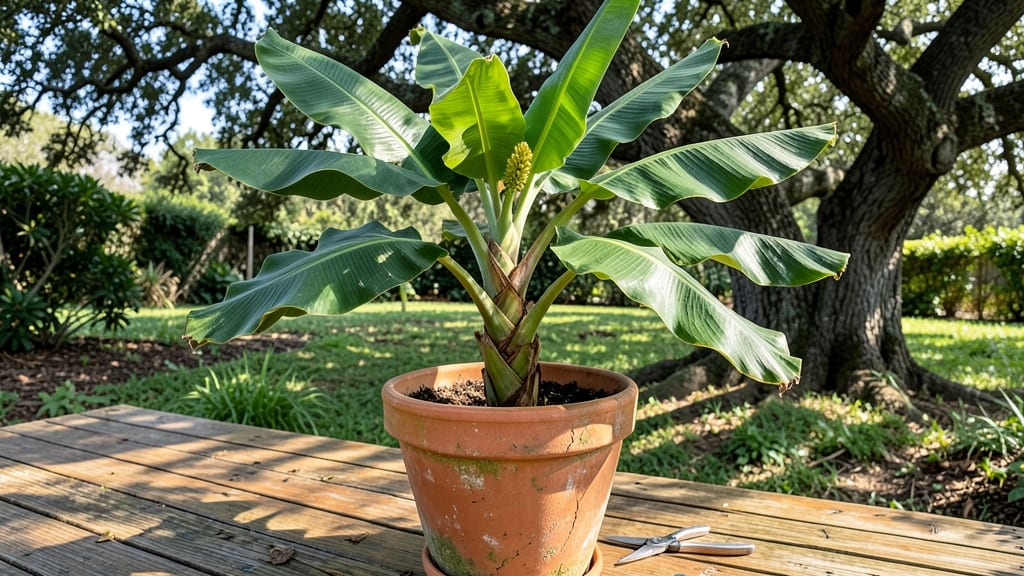
Growing a little banana tree indoors means year-round tropical vibes—even in winter. 🌿 My first dwarf Cavendish thrived after I stopped treating it like a high-maintenance exotic and focused on its basic needs: bright light, warm air, and consistent care.
The key isn't complicated soil or rare fertilizers—it's matching its natural habitat where it lives.
These compact varieties grow best in containers with drainage, so a 5-gallon pot works perfectly for the first few years. Use well-draining potting mix (cactus blend works) and place it where it gets 6+ hours of sunlight daily—a south-facing window or under grow lights.
They love humidity too, so mist leaves or set the pot on a tray of pebbles and water if your home feels dry.
With the right care, your banana tree will reward you with bold new leaves every few weeks and even produce small fruit bunches after 12-18 months. The secret is keeping the soil slightly moist but never soggy, and feeding with balanced fertilizer every 4-6 weeks during growing season.
Yellow leaves? Usually a sign of overwatering or nutrient imbalance—we'll fix that in the next steps.
Whether you're growing yours in a sunny kitchen corner or a greenhouse, the same principles apply. Let's get that little banana tree thriving—no tropical expertise required!
📚 In This Guide
- What you need
- Instructions
- Tips and common mistakes
- Wrapping up and next steps
What you need
- ● Pruning shears or loppers – Sharp, sterilized (bypass pruners work best for clean cuts). Size: 6–8" blades for small branches.
- ● Disinfectant (70% isopropyl alcohol or bleach solution) – 1 part bleach to 9 parts water to sterilize tools between cuts.
- ○ Gloves (heavy-duty) – Protects from thorns and sap. Optional: Nitrile gloves for extra grip.
- ○ Pruning sealant (optional but helpful) – Wound dressing for large cuts to prevent disease (e.g., Tanglefoot or Ortho Pruning Seal).
- ● Bucket or tarp – For collecting debris (banana leaves make great compost!).
- ● Sharp knife or razor blade – For precision cuts on pseudostems (the "trunk" of a banana tree).
- ● Timing – Prune during dormant seasons (late fall/winter) or after fruiting (spring/summer). Avoid heavy pruning when flowers/fruit are present.
- ● Weather – Choose a dry, overcast day to prevent stress on the plant.
- ● Safety first! – Wear long sleeves and closed-toe shoes—banana trees pack a punch with thorns!
- ● Know your tree’s age – Young trees (minimal pruning; mature trees (3+ years) can handle bolder cuts.
Step-by-step guide to pruning your little banana tree for maximum fruit
Here’s how I keep my dwarf banana plants thriving year-round while maximizing those sweet, heavy fruit loads.
🌿 Step 1: Identify the Right Time to Prune
Prune your banana tree during its active growing season, which is typically spring through early summer when new leaves unfurl. This is when the plant has the energy to recover quickly and produce more fruit. Avoid pruning in fall or winter unless you’re in a frost-free zone with consistent warmth.
Watch for new shoots emerging from the base—these are your signal that the plant is ready for maintenance. I wait until at least three new leaves have fully unfurled before I start cutting. This ensures the plant has enough stored energy to regenerate.
✂️ Step 2: Remove Dead or Yellowing Leaves
Start by cutting away any dead, yellow, or brown leaves using sterilized pruning shears. These leaves drain energy from the plant and can harbor pests or diseases. Snip them at the base of the leaf stem, making clean cuts just above a bud or node if possible.
I also remove any leaves that are torn or diseased—even if they’re still green. The goal is to keep the plant’s energy focused on healthy growth and fruit production. After pruning, wipe your shears with rubbing alcohol to prevent cross-contamination between cuts.
🌱 Step 3: Thin Out Overcrowded Pseudostems
Banana trees grow in pseudostems—thick, layered stems made of leaf sheaths. If your plant has more than three mature pseudostems, thin them out to one or two strongest stems. Cut the weaker ones at the base using sharp shears to avoid tearing the tissue.
Here’s the thing—overcrowding stresses the plant and reduces fruit yield. I prioritize keeping the tallest, healthiest stems while removing any that look weak, spindly, or diseased. This redirects energy to the remaining stems, encouraging bigger, fruitier growth.
☀️ Step 4: Encourage Airflow and Light Penetration
After pruning, space out the remaining leaves so they don’t block sunlight from reaching the center of the plant. Banana trees need bright, indirect light for optimal fruit production, and dense foliage can shade the lower leaves, leading to weak growth.
If your tree is in a container, rotate it quarter-turn weekly to ensure even light exposure. This prevents the plant from growing lopsided and ensures all leaves get sunlight. You’ll notice faster regrowth and healthier fruit clusters when airflow and light are optimized.
💧 Step 5: Post-Pruning Care for Recovery
After pruning, water deeply to help the plant recover. Banana trees have shallow but extensive root systems, so a slow, thorough soaking encourages root growth. Avoid wetting the leaves to prevent fungal diseases like black sigatoka, which thrives in damp foliage.
Fertilize with a balanced, slow-release fertilizer (like 10-10-10) two weeks after pruning to support regrowth. I also add a mulch layer around the base to retain moisture and regulate soil temperature. Within 4-6 weeks, you should see new leaves emerging—that’s your sign the pruning worked!
Tips & tricks for perfect little banana tree pruning
These little details make all the difference between a struggling plant and one that rewards you with heavy fruit harvests.
Seasonal Timing: Spring through early summer is your golden window for pruning because that's when your banana tree's energy is focused on growth rather than dormancy. I've learned the hard way that pruning in fall or winter—unless you're in a frost-free zone—can shock the plant and delay fruiting. Watch for those first three fully unfurled leaves on new shoots as your green light to begin.
Pruning Tool Precision: Sterilized pruning shears aren't just about clean cuts—they're about plant health. I keep rubbing alcohol handy to wipe between cuts, especially when removing diseased leaves. The last thing you want is spreading pathogens from one part of your plant to another. Make your cuts just above a bud or node when possible to encourage new growth from that exact spot.
Pseudostem Strategy: When thinning pseudostems, focus on keeping the tallest, healthiest ones—those are your fruit production powerhouses. I've found that maintaining just one or two strong stems actually increases fruit size and quantity. The weaker stems you remove might look sad now, but they're freeing up resources for your keepers to shine. Think of it as redirecting your plant's energy budget toward high-yield investments.
Light Optimization: After pruning, give your plant's center some breathing room by spacing out the remaining leaves. This isn't just about aesthetics—it's about ensuring lower leaves get their share of bright, indirect light. For container growers, that quarter-turn weekly rotation makes a surprising difference in preventing lopsided growth. I've seen plants that went from struggling to thriving just by getting even light exposure.
Pro Tips for Little Banana Tree
- These little details make all the difference between a struggling plant and one that rewards you with heavy fruit harvests.
- Seasonal Timing: Spring through early summer is your golden window for pruning because that's when your banana tree's energy is focused on growth rather than dormancy.
- Pruning Tool Precision: Sterilized pruning shears aren't just about clean cuts—they're about plant health.
Frequently asked questions
Got questions about keeping your little banana tree thriving with the perfect pruning routine? You’re in the right place! Here are answers to the most common queries—from timing to troubleshooting—to help you nurture a fruitful, healthy plant all year long.
How often should I prune my little banana tree for optimal fruit production?
Prune your little banana tree 2–3 times a year, focusing on spring (before flowering) and after harvest. Light trimming (removing dead or overcrowded leaves) can happen year-round, but avoid heavy cuts during winter dormancy. Pro tip: Never prune more than 1/3 of the plant at once—this shocks the tree and reduces fruit yield!
Can I prune my banana tree while it’s flowering or fruiting?
No—never prune during flowering or fruiting! This stresses the tree and can cause dropped flowers or fruit. Wait until 3–4 weeks after harvest to prune old pseudostems (the "trunk" layers). If you must trim, focus only on diseased or damaged leaves during this time.
What do I do if my little banana tree stops growing after pruning?
Slow growth post-pruning usually means over-pruning or nutrient deficiency. Check for:
- Yellowing leaves → Lack of potassium/magnesium (use banana peel tea or Epsom salt).
- Soft stems → Overwatering or root rot (reduce watering, improve drainage).
- No new shoots → Feed with a balanced fertilizer (10-10-10) and ensure full sun (6+ hours/day).
Is it okay to keep the old pseudostem (trunk) after pruning?
Yes! The old pseudostem acts as a nutrient reservoir for the new growth. Only remove it after it turns brown and dry (usually 6–12 months post-pruning). Cut it at the base with sterilized shears to prevent disease. Never pull it—this can damage roots!
What’s the best alternative if my little banana tree isn’t producing fruit?
If your tree is healthy but not fruiting, try these fixes:
- Age check: Banana trees often take 1–2 years to flower.
- Pollination: Hand-pollinate with a soft brush if bees aren’t visiting.
- Light adjustment: Ensure it gets bright, indirect sunlight (south-facing window or grow light).
- Stress reduction: Avoid drastic temperature swings (60–85°F is ideal).
Can I propagate my little banana tree from pruned cuttings?
Yes! Use healthy, disease-free suckers (shoots from the base) for propagation. Separate them with a sterilized knife, let the cut end callus for 1–2 days, then plant in well-draining soil. Keep humidity high (use a plastic bag) and water lightly until roots form (4–8 weeks). Pro tip: Use rooting hormone for faster success!
Wrapping up and next steps
Growing a thriving little banana tree with a heavy fruit load is all about balance—pruning at the right times, using the right tools, and listening to your plant’s needs. 🌱 By following this year-round blueprint, you’ll encourage lush foliage, robust growth, and an abundance of delicious bananas while keeping your tree healthy and pest-free.
Whether you’re a seasoned gardener or just starting, every trim brings you closer to that perfect harvest!
Ready to take the next step? Start small:
- 📅 Bookmark this guide and revisit it before each pruning session.
- 🛒 Grab your tools (sterilized shears, gloves, and pruning saw) and give your tree the TLC it deserves.
- 🌿 Share your progress with fellow plant lovers—join a gardening forum or tag us on social media!