
Pruning
The secret to apple tree gardening isn’t just planting—it’s the year-round care that turns a sapling into a fruit-bearing giant. 🌱 I learned this after my first tree produced tiny, deformed apples because I ignored the pruning schedule.
The right cuts at the right time mean the difference between a handful of fruit and bushels of crisp, sweet apples.
Start with the basics: full sun, well-draining soil, and space (20-25 feet between trees). But the real magic happens in winter when you prune to shape the tree and encourage strong growth. A sharp pair of pruners, a ladder, and a clear day are all you need—no fancy tools required.
Even if you’ve never pruned before, the method is simple once you understand the "three D’s" (dead, diseased, and crossing branches).
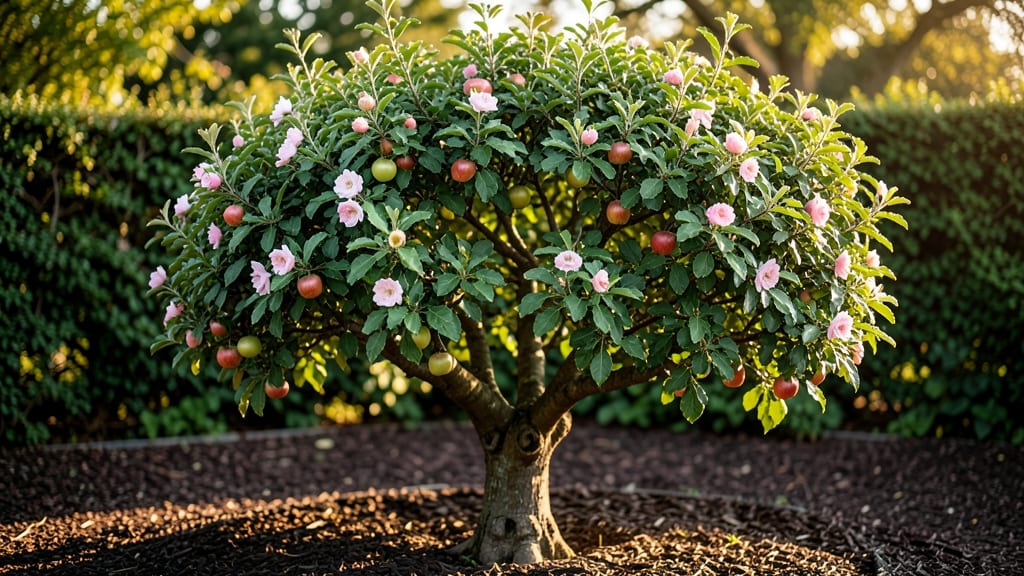
By summer, you’ll see the payoff: vibrant green leaves, sturdy branches, and—if you’ve timed your pruning right—blossoms that promise next year’s harvest. The tree becomes a living sculpture, productive and picturesque. With each season’s care, your apple tree grows not just taller, but more reliable.
Works for dwarf varieties in small yards or full-size trees in orchards. The principles stay the same, just scaled to your space. Let’s get your tree on the path to bounty.
📚 In This Guide
- What you need
- Instructions
- Tips and common mistakes
- Wrapping up and next steps
What you need
- ● Pruning Shears: Bypass pruners (sharp, 4-6 inches blades) for clean cuts on small branches.
- ● Loppers: 24-30 inches long for thicker branches (½–1½ inches in diameter).
- ● Pruning Saw: For branches 2+ inches thick (avoid bolt cuts—make angled cuts).
- ● Disinfectant: 70% isopropyl alcohol or 10% bleach solution to sterilize tools between cuts.
- ○ Pruning Sealant: (Optional but helpful) Tree wound paint for cuts larger than ½ inch.
- ● Work Gloves: Heavy-duty, cut-resistant gloves for safety.
- ● Ladder or Step Stool: Sturdy and tall enough to reach branches safely.
- ● Tarp or Drop Cloth: To collect fallen debris and protect the ground.
- ● Notebook & Pen: For tracking pruning notes (e.g., branch sizes, growth patterns).
- ● Pole Pruner: Extendable tool for high branches (saves ladder time!).
- ● Tree Pruning Spreadsheet: Digital or printed template to map your tree’s structure.
- ● Compost Bin: For repurposing pruned branches into nutrient-rich compost.
- ● Safety Goggles: Protects eyes from debris (especially when using a saw).
- ● Tree Growth Regulator: Spray or gel to encourage healthy regrowth post-pruning.
How to prune apple trees for maximum fruit production
This is the pruning method I’ve used for years to keep my trees healthy and productive.
✂️ Step 1: Choose the Right Time to Prune
Prune your apple tree during late winter or early spring, just before buds swell but before new growth begins. This timing ensures the tree isn’t stressed during dormancy or vulnerable to disease when sap flows. Avoid pruning in fall—it invites fungal infections that overwinter in the wounds.
If you must prune in summer, do it after harvest to allow wounds time to heal before winter. Look for dormant buds along branches—they’ll appear plump and ready to burst. That’s your cue to start shaping the tree.
✂️ Step 2: Remove Dead, Diseased, or Crossing Branches First
Start by cutting out dead wood—it’s easy to spot because it’s dry, brittle, and often gray or brown. Next, remove any branches with fungal spots, cankers, or oozing sap. These branches won’t recover and can spread disease to healthy parts of the tree.
Look for branches growing inward or rubbing against others—these crossing branches compete for space and create wounds where pests love to hide. Use clean, sharp pruners to make 45-degree cuts just outside the branch collar (the swollen area where the branch meets the trunk).
✂️ Step 3: Thin Out Excess Growth for Airflow and Light
Apple trees produce fruit on spurs (short, stubby branches) and scaffold limbs (main structural branches). Aim to keep the center of the tree open—this improves airflow and sunlight penetration, which reduces disease and encourages better fruit development.
Cut back overcrowded branches to leave 6-8 inches of space between them. Focus on removing water sprouts (fast-growing, vertical shoots) and suckers (shoots growing from the base). These compete with fruit-bearing wood for energy. Watch for leafy growth at branch tips—if you see dense foliage blocking sunlight, that’s a sign you need to thin.
✂️ Step 4: Shape the Tree for Balance and Future Growth
Step back and assess the tree’s shape. A well-pruned apple tree should have a rounded canopy with branches spaced evenly. Start by shortening overly long branches by about one-third to encourage bushier growth. Make cuts just above an outward-facing bud.
Pay attention to the scaffold limbs—these should be 4-6 feet apart and angled outward. If a branch is growing too upright, cut it back to a side bud to encourage a more horizontal growth habit. This prevents weak crotches that can split under fruit weight.
⏰ Step 5: Clean Up and Monitor for Recovery
After pruning, collect and dispose of all cuttings—don’t leave them on the ground, as they can harbor disease. Sterilize your pruners with rubbing alcohol between cuts to prevent spreading pathogens. Apply a wound sealant (like pruning paint) only if the tree is in a high-disease area—otherwise, let the tree heal naturally.
Water the tree deeply after pruning to help it recover. Over the next few weeks, watch for new buds swelling—this is a sign the tree is responding well. Avoid heavy pruning in the following year to give the tree time to regenerate. You’ll see stronger growth and better fruit production within a season.
Tips & tricks for perfect apple tree pruning
Real talk: Pruning an apple tree isn't just about cutting branches—it's about shaping a future harvest. Here's what nobody tells you about getting it right the first time.
Timing is Everything: The late winter/early spring window is non-negotiable for disease prevention. I learned this the hard way after pruning in fall and watching fungal infections spread through my entire orchard. If you must prune in summer, wait until after harvest when the tree has time to heal before winter's stress sets in. Those dormant buds you'll see—plump and ready to burst—are your visual cue that it's time to start shaping.
Tool Prep Makes All the Difference: Sterilizing your pruners with rubbing alcohol between cuts isn't just good practice—it's essential. I used to skip this and ended up with infected branches that took years to recover. Make those 45-degree cuts just outside the branch collar every single time. This simple technique prevents weak spots that split under fruit weight later. Sharp tools are your best friend here—dull blades tear wood, creating larger wounds that heal poorly.
Visual Cues for Better Pruning: When thinning branches in Step 3, imagine sunlight streaming through the center of your tree. You want to see light reaching all the way to the trunk. For those scaffold limbs, picture them spaced like spokes on a wheel—4-6 feet apart with outward angles. If you're cutting back overly long branches by one-third, look for outward-facing buds to encourage bushier growth. These visual cues will transform your pruning from guesswork to precision.
Pro Tips for Apple Tree Gardening
- Real talk: Pruning an apple tree isn't just about cutting branches—it's about shaping a future harvest.
- Timing is Everything: The late winter/early spring window is non-negotiable for disease prevention.
- Tool Prep Makes All the Difference: Sterilizing your pruners with rubbing alcohol between cuts isn't just good practice—it's essential.
Frequently asked questions
Got questions about keeping your apple tree thriving with strategic trimming? We’ve got answers!
When is the best time to prune an apple tree?
The ideal time is late winter or early spring (just before buds swell) for dormant pruning. You can also do light summer pruning to remove water sprouts or diseased branches, but avoid heavy cuts during active growth. Pro tip: Never prune in fall—it invites pests and diseases!
How much of my apple tree should I trim each year?
Aim to remove no more than 20-25% of the tree’s canopy annually to avoid stress. Young trees need more aggressive pruning (up to 30%) to establish structure, while mature trees should have minimal cuts. Watch for: Dead, crossing, or overcrowded branches—these are top priorities!
What should I do if my apple tree has pests after pruning?
Pruning opens wounds, so pests like aphids or borers may strike. Act fast: Remove infested branches immediately, apply horticultural oil or neem spray, and keep the area clean. Prevent future issues by sterilizing tools with rubbing alcohol between cuts.
Can I grow dwarf apple trees in containers?
Yes! Dwarf varieties (like ‘Columnar’ or ‘Semi-Dwarf’) thrive in 5-gallon containers with well-draining soil. Prune regularly to maintain shape and size, and move pots to sunnier spots in winter. Remember: Container trees need annual repotting and extra watering.
How do I know if I’m pruning too much?
Signs of over-pruning include excessive leaf drop, stunted growth, or weak branches. If your tree struggles to recover within a season, you’ve likely removed too much. Rule of thumb: Never cut back more than 1/3 of a branch’s diameter in one go.
Wrapping up and next steps
Growing your own apple tree is a rewarding journey that combines patience, care, and a little strategic trimming.
By mastering the art of pruning—whether in late winter or early spring—you’ll unlock healthier growth, better fruit production, and a stunning, well-shaped tree. So grab those shears, roll up your sleeves, and get ready to harvest that sweet, homegrown bounty! 🍏✨
Your next step? Start small—pick one branch to practice, or tag a fellow gardening buddy for tips. Before you know it, your backyard will be buzzing with the promise of crisp, juicy apples! 🌱💪