
Pruning
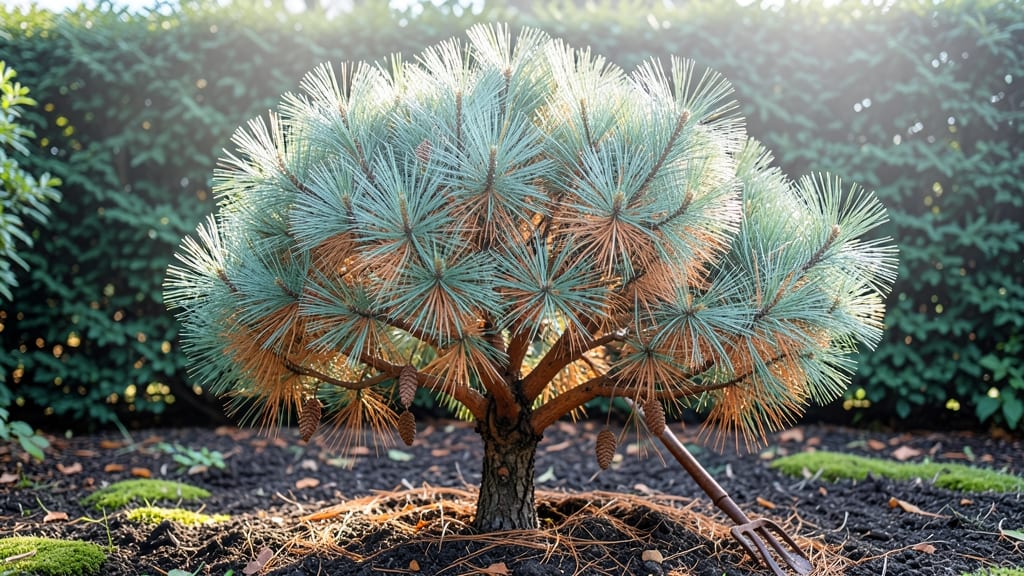
Pruning a ball pine tree (Pinus bungeana) isn’t just about keeping its signature rounded shape—it’s about unlocking stronger branches and healthier growth year-round. 🌲 I’ve learned that the right cuts at the right time transform this ornamental tree from "pretty but fragile" to "sturdy and showstopping," even in harsh winters.
The key is working with the tree’s natural growth patterns: light shaping in spring, structural pruning in late winter, and minimal touch-ups after storms. You’ll need sharp bypass pruners, gloves, and a ladder (for taller trees)—that’s it.
The goal isn’t perfection but balance, so even beginners can achieve pro-level results with just a few cuts.
What you’ll end up with is a tree that stays compact, resists wind damage, and develops thicker, more vibrant foliage at the tips. The unique peeling bark becomes even more striking, and new growth fills in gaps where branches once looked sparse.
It’s the kind of transformation that makes neighbors ask, "How’d you do that?"
This method works for ball pines in USDA Zones 4-8, whether planted in gardens, urban landscapes, or large containers. The same principles apply whether you’re pruning a 5-year-old sapling or a mature 20-footer—just adjust the scale. Let’s get those branches stronger than ever.
📚 In This Guide
- What you need
- Instructions
- Tips and common mistakes
- Wrapping up and next steps
What you need
- ● Pruning shears or lopers: Sharp, bypass-style shears (for branches 1/4" thick); lopers (for thicker branches up to 2"). Quantity: 1 pair each.
- ● Hand pruners: Bypass pruners for precision cuts on smaller branches (1/8"–3/8" thick). Quantity: 1 pair.
- ● Pole saw or pruning saw: Extendable pole saw (for high branches) or a curved-tooth pruning saw for thick branches. Quantity: 1.
- ● Disposable gloves: Heavy-duty, cut-resistant gloves (e.g., mechanics’ gloves or pruning gloves). Quantity: 1 pair.
- ● Rubbing alcohol or bleach solution: 70% isopropyl alcohol or a 1:9 bleach-water mix to sterilize tools between cuts. Quantity: Small bottle or spray.
- ○ Tree wound dressing (optional but recommended): Pruning sealant (e.g., Tanglefoot Tree Wound Pruning Seal) for cuts larger than 1/2". Quantity: Small tube.
- ● Ladder or step stool: Sturdy, extension ladder (for trees over 6–8 ft tall) or a foldable step stool (for shorter trees). Safety note: Use with a spotter if needed!
- ● Heavy-duty trash bags: For collecting pruned branches. Quantity: 2–3 bags.
- ● Safety goggles: To protect eyes from debris. Quantity: 1 pair.
- ● Loppers with a crimping tool: Helps seal larger cuts naturally (reduces disease risk).
- ● String or measuring tape: For marking branches to remove (if planning a gradual shape).
- ● Spray bottle with water: Keeps tools cool and clean during hot pruning sessions.
- ● Knee pads: For comfort if you’ll be working close to the ground.
- ● Camera or sketchpad: To document your tree’s shape before/after pruning!
Step-by-step instructions for pruning ball pine trees
Transform your ball pine into a lush, symmetrical masterpiece with these precision techniques.
✂️ Step 1: Assess the Tree and Plan Your Cuts
Start by examining the tree from all angles—look for branches that disrupt the natural round shape or grow inward. I focus on three key areas: dead or crossing branches, overcrowded growth, and branches longer than 12 inches that break the ball form. Use a notepad to sketch a quick diagram if needed; visualizing the cuts first prevents over-pruning.
Real talk: Ball pines are dense, so you won’t see the full structure until you step back 10 feet away. This distance reveals where the shape sags or where branches stick out unevenly. Mark your target cuts with a piece of twine tied around the branch—this prevents hesitation mid-cut and ensures clean, intentional pruning.
✂️ Step 2: Use the Right Tools for Clean Cuts
Grab your sharp bypass pruners for branches up to ½ inch thick and a pruning saw for anything larger. Dull tools tear bark, inviting disease—test your pruners by making a clean cut through a small branch. If the cut looks jagged, sharpen them before proceeding. I always clean my tools with rubbing alcohol between trees to prevent cross-contamination.
Make cuts at a 45-degree angle, just above an outward-facing bud or lateral branch. This angle encourages water to run off and directs new growth outward, maintaining the ball shape. Avoid cutting flush with the trunk—leave a small stub to protect the tree from rot. If you’re unsure where to cut, follow the branch’s natural taper until you see the bud.
✂️ Step 3: Prune in Layers for a Natural Look
Begin by removing dead or diseased branches first—these are easy to spot as they’re brown, brittle, or lack needles. Next, tackle branches that cross or rub against others; these compete for sunlight and weaken the tree. I like to work from the outside in, shaping the perimeter before refining the interior. This keeps the ball’s symmetry intact.
For branches longer than 12 inches, cut back to a lateral branch or bud that points outward. If you’re unsure, trim just enough to maintain the round silhouette—ball pines thrive on gradual shaping. Step back every few cuts to check your progress; the goal is a uniform, dense ball, not a trimmed-down skeleton. Avoid removing more than 25% of the tree’s foliage in one session.
🌿 Step 4: Post-Pruning Care for Faster Recovery
After pruning, inspect the cuts for any ragged edges or exposed wood. Smooth these with your pruners if needed—clean cuts heal faster. Water the tree deeply to 12 inches down to help it recover, especially if you pruned during dry weather. I mulch around the base with 2-3 inches of organic mulch (like pine straw) to retain moisture and protect roots.
Here’s the thing—ball pines respond best to light, frequent pruning rather than heavy annual cuts. Schedule a quick trim every 4-6 weeks during the growing season (spring through early fall) to maintain shape. Avoid pruning in late fall or winter, as the tree won’t have time to seal cuts before dormancy. Watch for new growth within 4-6 weeks; this signals the tree is healing well.
Tips & tricks for perfect ball pine tree pruning
Common pitfalls—and how to sidestep every one—when shaping your ball pine like a pro.
Visual Cues Matter: In Step 1, when you step back 10 feet to assess the tree, focus on the silhouette rather than individual branches. Look for asymmetrical shadows or uneven density—these reveal where the ball shape breaks down. I use a small mirror on a stick to check hard-to-see areas behind the tree. This 10-foot perspective is your secret weapon for maintaining that perfect spherical form.
Tool Sharpness is Non-Negotiable: Before you make any cuts in Step 2, test your pruners on a scrap branch—if the cut isn't clean and smooth, sharpen them immediately. Dull tools crush rather than cut, creating jagged wounds that invite disease. I keep a small file in my tool bag specifically for quick sharpening between cuts. Remember, a clean cut heals faster and looks more professional.
Layering Technique for Natural Shape: When working through Step 3's layers, prioritize removing branches that grow inward first—they're the primary culprits disrupting the ball form. Think of it like sculpting: you're removing material to reveal the shape beneath. For branches longer than 12 inches, make your cut just above a lateral branch that points outward. This encourages new growth to continue the ball's natural expansion.
Seasonal Timing Strategy: The instructions mention pruning every 4-6 weeks during growing season, but here's the thing: morning sessions work best. Trees have higher moisture content in the morning, making cuts cleaner and reducing stress on the plant. Also, avoid pruning during heatwaves—your tree is already dealing with water stress, and fresh cuts won't heal as quickly in extreme heat.
Pro Tips for Ball Pine Tree
- Common pitfalls—and how to sidestep every one—when shaping your ball pine like a pro.
- Visual Cues Matter: In Step 1, when you step back 10 feet to assess the tree, focus on the silhouette rather than individual branches.
- Tool Sharpness is Non-Negotiable: Before you make any cuts in Step 2, test your pruners on a scrap branch—if the cut isn't clean and smooth, sharpen them immediately.
Frequently asked questions
Got questions about pruning your ball pine tree?
Here are answers to the most common ones—from timing to tools and troubleshooting!
When is the best time of year to prune a ball pine tree?
The ideal time is late winter or early spring (February–March) when the tree is dormant but before new growth starts. Avoid pruning in extreme heat or cold, as it stresses the tree. Light shaping can also happen in summer to maintain its rounded form, but avoid heavy cuts then.
How do I know which branches to cut on a ball pine?
Focus on dead, diseased, or crossing branches first. For shaping, trim back overly long branches to maintain the tree’s natural round silhouette. Never remove more than 25% of the foliage in one session—this keeps the tree healthy. Look for branches growing inward or rubbing against others; these should go first!
Can I prune a ball pine tree in summer? What are the risks?
Yes, but lightly! Heavy summer pruning can stress the tree, making it vulnerable to pests or disease. If you must shape it, do so on cool, cloudy days to reduce water loss. Avoid pruning during heatwaves—stick to early morning or late afternoon if you’re maintaining its form mid-season.
What should I do if my ball pine tree looks sad after pruning?
If needles turn brown or the tree seems weak, it’s likely over-pruned or stressed. Give it time (a few weeks) and ensure it gets consistent watering and well-draining soil. Avoid fertilizing immediately—wait until new growth appears. If the issue persists, check for pests or fungal issues (like needle cast) and treat accordingly.
Are there alternatives to pruning for shaping a ball pine?
If you’re hesitant about pruning, try selective thinning instead of heavy cuts—focus on removing only the tips of branches to encourage bushier growth. You can also use plant growth regulators (like paclobutrazol) to slow vertical growth, but pruning remains the most effective way to maintain its iconic round shape.
Wrapping up and next steps
The ball pine tree thrives when you embrace year-round pruning—not just as a chore, but as a way to nurture its natural beauty and resilience.
By following the right techniques, timing, and tools, you’ll reward yourself (and your tree!) with stronger branches, lush foliage, and a stunning, rounded silhouette that’s the envy of the neighborhood. 🌲✨
Ready to take your pruning skills to the next level? Start small: pick one season to practice, then expand your routine. Grab your tools, step outside, and give your ball pine the care it deserves—your future self (and tree!) will thank you!