
Pruning
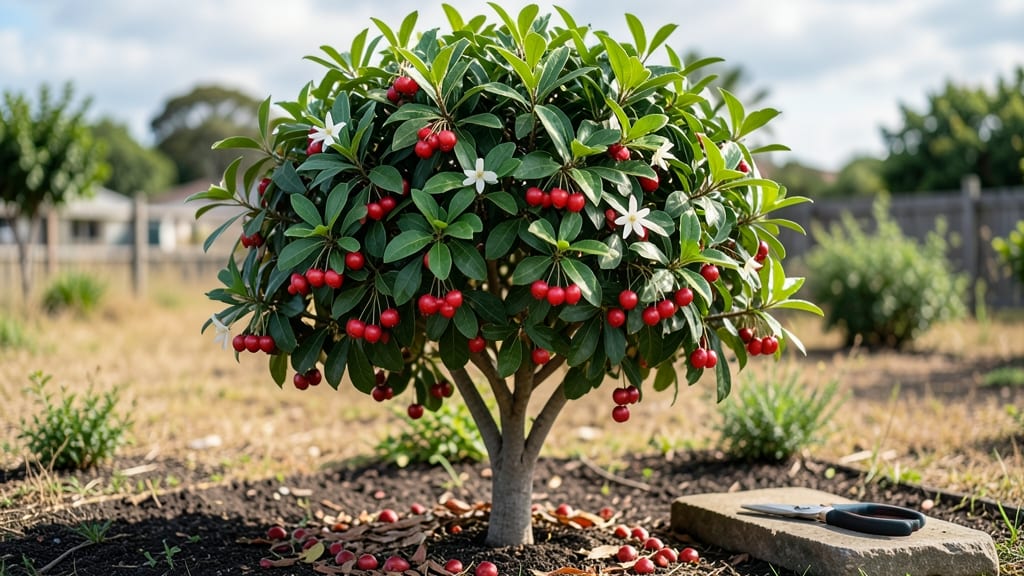
Growing a Brazil cherry tree (Eugenia uniflora) means you’ll get edible fruit that tastes like a cross between cherry and raspberry—plus stunning glossy leaves and white flowers year-round.
The key to keeping it productive (and not top-heavy) is pruning at the right times, which I learned the hard way when my first tree nearly snapped under winter fruit. This tree thrives in USDA zones 8-11, so if you’re in that range, you’re in luck—it’s low-maintenance once established.
You’ll need well-draining soil (sandy loam works best), full sun to partial shade, and regular watering while young—think 1-2 inches per week in the first year. The tree handles drought once mature but rewards you with hundreds of small, tart-sweet fruits in late summer if you prune correctly.
I’ve seen neighbors’ trees loaded down with cherries while mine stayed bare until I adjusted my approach.
Pruning isn’t just about shaping—it’s about light penetration and air circulation, which keeps both fruit and foliage healthy. By winter, you’ll trim back overgrown branches to open the canopy, and in spring, you’ll encourage new growth where you want it.
The result? A tree that produces consistently without breaking under its own weight.
This method works for container growing too—just use a 15-gallon pot and prune aggressively to keep it compact. Whether you’re growing it for fruit, shade, or just the pretty foliage, the same pruning rules apply.
Let’s get your tree set up for a harvest that’ll have everyone asking where you got it.
📚 In This Guide
- What you need
- Instructions
- Tips and common mistakes
- Wrapping up and next steps
What you need
- ● Pruning shears: Bypass pruners with sharp, sterilized blades (for cuts under ½ inch thick). Recommended: Felco F-2 or similar.
- ● Loppers: For thicker branches (½ to 1½ inches). Look for ratchet-style loppers for easier cutting.
- ● Pruning saw: A curved-tooth saw for branches over 1½ inches in diameter.
- ● Gloves: Heavy-duty, cut-resistant gloves (e.g., Mechanix or similar) to protect your hands.
- ● Disinfectant: 70% isopropyl alcohol or a pruning sealant (like Tanglefoot Tree Wound Pruning Seal) to prevent disease spread.
- ● Ladder or step stool: Sturdy and tall enough to reach the tree’s canopy safely.
- ● Heavy-duty trash bags: For collecting and disposing of pruned branches.
- ● Notebook & pencil: To sketch the tree’s structure and mark cuts before pruning.
- ● Extension pole pruners: For high branches without a ladder.
- ● Tree wound dressing: (e.g., Tree Seal Tape) for larger cuts (controversial but useful in some climates).
- ● Safety glasses: To shield your eyes from debris.
- ● Pruning rope or zip ties: For temporarily supporting weak branches.
- ● Spray bottle with water: To dampen saw blades and reduce dust.
How to prune a Brazil cherry tree for optimal fruit production
Pruning this tropical beauty isn't just about shaping—it's about balancing growth and fruit load year-round.
Assess the Tree Structure in Early Spring
Begin your pruning regimen in late February to early March, just as new growth begins but before buds swell. This timing gives you a clear view of last year's structure while avoiding winter stress. Start by removing any dead, diseased, or crossing branches—these compete with healthy growth and reduce fruit quality. Use sharp, clean pruners to make cuts at a 45-degree angle just outside the branch collar.
Look for water sprouts—those fast-growing vertical shoots that steal energy from fruit production. These should be cut back to their point of origin. I always scan for branches growing toward the center of the tree; these will rub against each other as they thicken, creating wounds that invite pests. Remove them entirely, even if they're healthy, to open up the canopy for better airflow and sunlight penetration.
Thin Out Overcrowded Branches During Summer
Mid-summer, around July, is the time to focus on selective thinning rather than heavy pruning. The goal here isn't to reduce overall size but to improve fruit quality by spacing out branches. Choose 3-4 main scaffold branches that are evenly spaced around the trunk—these will form the tree's primary structure. Remove competing branches that grow too close to these main limbs, cutting back to the nearest lateral bud or branch junction.
Pay special attention to clusters of fruit. If you notice branches bearing more than 10-12 cherries, thin them to 5-7 of the largest, healthiest fruits. This might seem counterintuitive, but it ensures each remaining cherry gets proper nutrients and sunlight, resulting in larger, sweeter fruit. You'll know you're doing it right when you see new shoots forming along the remaining branches—this signals the tree is redirecting energy to productive growth.
Light Pruning After Harvest in Fall
Once the fruit harvest is complete, typically in late October to November, perform a light maintenance prune. Focus on removing any suckers—those vigorous shoots that emerge from the base or along the trunk. These saplings divert energy away from the main canopy. Cut them back to ground level immediately, as they'll quickly outcompete the established tree if left unchecked.
Next, inspect the tree for any branches that produced poor-quality fruit or showed signs of stress (yellowing leaves, sparse foliage). These branches are candidates for removal. Make your cuts just above a healthy lateral bud or branch, angled slightly away from the bud to prevent water from pooling. Avoid heavy pruning now—the tree needs to harden off for winter, and late cuts can stimulate new growth that won't survive cold snaps.
Winter Dormancy Pruning (Optional for Mature Trees)
If your tree is 5 years old or older, you can perform a structural pruning session in late winter (January-February) while the tree is fully dormant. This is when you can make more aggressive cuts to open up the canopy further. Start by removing any low-hanging branches that drag on the ground—these are prone to disease and take up energy the tree could use for fruit production. Cut them back to a strong lateral branch or the trunk.
Next, look for old wood—branches that are thicker than your thumb and have stopped producing quality fruit. These are prime candidates for removal to encourage new, vigorous growth from younger wood. Step back frequently to visualize the tree's shape. The goal is to create an open vase-like structure that allows sunlight to reach the center, where many of the best-quality cherries develop. Avoid removing more than 25% of the canopy in any single pruning session to prevent shocking the tree.
Tips & tricks for perfect Brazil cherry tree pruning
These practical insights will help you maximize your tree's fruit production while avoiding common pruning pitfalls that could stress your tropical beauty.
Timing Precision: The late February to early March window for Step 1 is critical because it coincides with the tree's natural dormancy break. I've seen trees stressed when pruned too early—wait until you see the first tiny green buds emerging from last year's wood. This timing ensures you're not removing growth that would have produced fruit, while still having clear visibility of the tree's structure.
Visual Cues for Selective Thinning: In Step 2, when choosing your 3-4 main scaffold branches, look for ones that form a natural open vase shape when viewed from above. The ideal branches should emerge from the trunk at angles between 45-60 degrees—this creates the strongest structural support. For fruit clusters, use the "hand test": if you can't easily fit your hand between the cherries, it's time to thin. This simple check prevents overcrowding that leads to smaller, less flavorful fruit.
Sucker Management Strategy: During the fall maintenance in Step 3, I've found that suckers often emerge from the root flare area where the trunk meets the soil. Use a sharp spade to carefully expose any hidden suckers before cutting—this prevents them from regrowing from buried portions. For branches showing stress, make your cuts just above a lateral bud that faces outward from the tree. This encourages new growth in the direction you want, rather than creating inward-growing branches that will eventually need removal.
Winter Pruning Safety: When performing the optional winter dormancy pruning in Step 4, never remove more than 25% of the canopy in one session. I've seen growers over-prune in winter and end up with trees that struggle to recover. Mark your cuts with twine before making them—this helps you visualize the final shape and ensures you're not removing too much at once. Also, clean your pruners with rubbing alcohol between cuts to prevent spreading any potential diseases that might be hiding in the tree's wounds.
Pro Tips for Brazil Cherry Tree
- These practical insights will help you maximize your tree's fruit production while avoiding common pruning pitfalls that could stress your tropical beauty.
- Timing Precision: The late February to early March window for Step 1 is critical because it coincides with the tree's natural dormancy break.
- Visual Cues for Selective Thinning: In Step 2, when choosing your 3-4 main scaffold branches, look for ones that form a natural open vase shape when viewed from above.
Frequently asked questions
Got questions about growing and maintaining a Brazil cherry tree? You’re not alone! Here are some of the most common concerns—plus straightforward answers to keep your tree thriving and productive.
When is the best time to prune a Brazil cherry tree for fruit production?
The ideal time to prune is late winter or early spring (before buds swell), but you can also do light pruning after harvest to shape the tree. Avoid heavy pruning in fall, as it can stimulate new growth that won’t harden off before winter. Focus on removing dead wood, crossing branches, and thinning to improve airflow—this boosts fruit quality and reduces disease risk. Pro tip: Use sharp, sterilized tools to prevent damage!
How much can I prune a Brazil cherry tree without harming it?
For young trees, limit pruning to 20-30% of the canopy per year to avoid stress. Mature trees can handle 15-25% of foliage removal annually, but never cut back more than ¼ of the tree’s total branches in one season. Over-pruning weakens the tree and reduces next year’s fruit load. Prioritize structural pruning—removing water sprouts, deadwood, and crowded branches—to maintain health and productivity. Pro tip: Step back and assess the tree’s shape before cutting!
What should I do if my Brazil cherry tree isn’t producing fruit?
Low fruit production often stems from poor pruning, insufficient sunlight, or nutrient deficiencies. First, check if the tree gets 6+ hours of direct sun daily. Next, ensure it’s pruned correctly—thin out dense branches to improve light penetration. Fertilize in early spring with a balanced formula (like 10-10-10) and add compost to the soil. If the tree is young (<5 years), be patient—it may still be maturing. Pro tip: Hand-pollinate flowers if bees are scarce in your area!
Are there any alternatives to Brazil cherry trees for heavy fruit yields?
Yes! If you love high-yielding fruit trees, consider these low-maintenance alternatives:
- Fig trees – Drought-tolerant, fast-growing, and produce fruit with minimal pruning.
- Pomegranate trees – Thrives in heat, needs light pruning, and yields abundantly.
- Jujube trees – Cold-hardy, disease-resistant, and produce sweet fruit with little effort.
- Persimmon trees – Hardy and productive, though they require patience (5+ years to bear fruit).
Why are my Brazil cherry tree’s leaves turning yellow or dropping?
Yellow leaves or premature leaf drop usually signal nutrient deficiencies, overwatering, or disease. Check the soil—chlorosis (yellowing between veins) often means iron or zinc deficiency (common in alkaline soils). Brown, crispy leaves may indicate underwatering or root rot (from overwatering). Black spots or mold suggest fungal issues like powdery mildew. Adjust care:
- Test soil pH (ideal: 6.0–7.0 for Brazil cherries).
- Water deeply but infrequently (1–1.5 inches per week).
- Apply chelated iron or Epsom salt for deficiencies.
- Prune affected branches and treat with neem oil for fungal issues.
Wrapping up and next steps
The Brazil cherry tree is a rewarding addition to any orchard or backyard, offering abundant fruit and stunning foliage when cared for properly. With the right tools, timing, and techniques—especially year-round pruning—you can ensure a healthy tree that thrives under heavy fruit loads. 🌿
Now that you’re equipped with the knowledge, roll up your sleeves and get pruning! Start with a light maintenance trim this season, and soon, you’ll be harvesting sweet, juicy cherries like a pro. Ready to dive in? Grab your shears and begin your journey today!