
Pruning
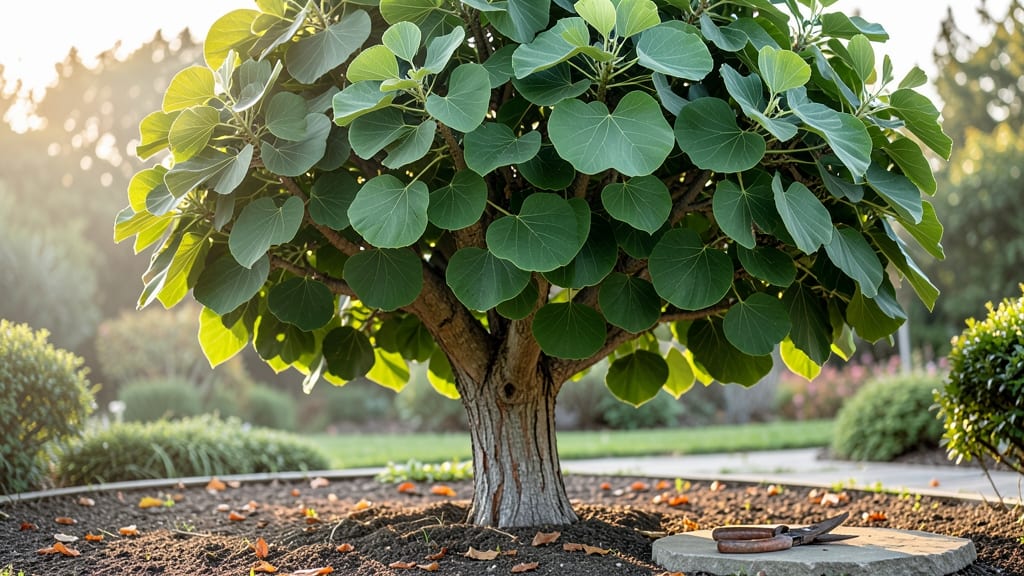
Growing a purple empress tree paulownia means watching a 30-foot giant emerge from a seedling in just a few years. 🌿 The deep purple foliage alone makes it a standout, but its rapid growth and dramatic height transform any yard into a striking landscape feature.
My first Purple Empress shot up 10 feet in its second season—something I never expected from a tree.
This tree thrives in full sun and well-draining soil, making it surprisingly low-maintenance once established. You’ll need a spacious yard since its roots spread aggressively, but the trade-off is minimal pruning needs.
Water deeply when young, but mature trees handle drought surprisingly well. The real magic happens when it flowers—massive, fragrant blooms in spring that attract hummingbirds.
By summer, you’ll have a shade canopy that cools your patio, and by fall, the foliage turns golden before dropping. The only challenge? Controlling its size—it’s not for small spaces. But if you have room, this tree delivers instant impact with decades of drama. Let’s get yours planted right.
Perfect for bold landscapes, privacy screens, or statement pieces. Just be ready for neighbors to ask how you grew it so fast—because they’ll be jealous of that 30-foot purple giant in your backyard.
📚 In This Guide
- What you need
- Instructions
- Tips and common mistakes
- Wrapping up and next steps
What you need
- ● Pruning shears: Bypass pruners (for smaller branches, 6–8" blades) – 1 pair 🔪
- ● Loppers: Heavy-duty (for thicker branches, 20–24" handles) – 1 pair
- ● Pruning saw: Curved-tooth saw (for branches >2" in diameter) – 1
- ● Gloves: Heavy-duty, cut-resistant (e.g., Mechanix or pruning gloves) – 1 pair 🧤
- ● Disinfectant: 70% isopropyl alcohol or pruning sealant (to prevent disease) – small bottle
- ● Work boots: Sturdy, ankle-supporting (for stability on uneven ground)
- ● Safety glasses: ANSI-rated (to protect from debris) – 1 pair 👓
- ● Extension pole: 6–10 ft (for high branches) – 1
- ● Ladder: Sturdy, extendable (if tree is near structures) – 1
- ● Pruning rope: ¼" diameter (for support while cutting large branches) – 50 ft roll
- ● Tree wound dressing: (Controversial but useful for severe cuts) – small tub
- ● Notebook/pencil: To track pruning notes (e.g., branch sizes, dates) 📝
Step-by-Step guide to planting and caring for Purple Empress tree Paulownia
Here's how to get this fast-growing giant established with minimal fuss—it rewards patience with dramatic results.
🌱 Step 1: Choose the Perfect Planting Spot
Purple Empress Paulownia thrives in full sun—at least 6-8 hours daily—but its massive roots need space. Avoid planting within 30 feet of structures or septic systems; those roots will crack foundations. I always check utility lines before digging, since the taproot can reach 50 feet deep.
The soil should drain like a sieve—this tree hates soggy feet. If your yard holds water, amend with 2-3 inches of coarse sand or gravel mixed into the top 12 inches of soil. Test the spot by digging a 12-inch hole—if water pools after 24 hours, move to higher ground.
🪴 Step 2: Plant at the Right Time and Depth
Spring is ideal—plant after the last frost when soil warms to 60°F. The hole should be twice as wide as the root ball but no deeper. Loosen the root ball's edges if it's tightly bound; gently tease apart any circling roots with your fingers. Purple Empress trees hate being buried too deep—set it so the top of the root ball sits 1-2 inches above ground level.
Backfill with native soil, tamping lightly every 2 inches to eliminate air pockets. Water deeply until the soil 6 inches down is saturated. I always add a 3-inch layer of mulch (wood chips or bark) around the base, keeping it 6 inches away from the trunk to prevent rot. This mulch ring helps retain moisture while the tree establishes its deep root system.
☀️ Step 3: Water Strategically for Fast Establishment
For the first 2-3 years, water deeply once a week during dry spells—aim for 1-2 gallons per watering. You'll know it's enough when water runs out the bottom of the 12-inch-deep hole you dug earlier. Overwatering causes root rot, but underwatering stresses the tree as it grows. Purple Empress trees develop drought tolerance after 3-4 years, but they won't reach their 30-foot canopy without consistent moisture early on.
Here's the thing—this tree's growth rate is legendary, but it needs nutrient-rich soil. In spring and fall, spread 2-3 pounds of 10-10-10 fertilizer around the drip line and water it in. Avoid fertilizing after mid-summer; new growth won't harden off before winter. You'll see 3-5 foot growth spurts in ideal conditions—watch for the first flush of large, heart-shaped leaves in spring.
✂️ Step 4: Prune for Structure and Safety
Pruning isn't just about aesthetics—it's about controlling this tree's aggressive growth. In late winter or early spring, remove 30-50% of the previous year's growth to encourage a strong central leader. Cut back to a bud facing outward on each branch. I always sterilize my pruners with rubbing alcohol between cuts to prevent disease spread.
Watch for weak crotches where branches meet the trunk—these can split under the weight of heavy foliage. Remove any crossing branches or those growing inward. Purple Empress trees self-prune to some extent, dropping lower branches as they mature, but strategic pruning keeps the canopy balanced and reduces storm damage risk. Never remove more than 25% of the canopy in one season—this tree grows fast, but it can't recover from severe cuts.
⏰ Step 5: Monitor for Pests and Seasonal Care
Purple Empress trees are generally pest-resistant, but watch for aphids or spider mites on new growth. A strong spray of water usually knocks them off; for stubborn infestations, use horticultural oil. The tree's rapid growth often outpaces pest damage, but I've seen severe infestations stunt first-year seedlings if left unchecked.
In winter, the tree's large leaves will die back, but the woody stems remain. Young trees benefit from wrapping the trunk with burlap if your winters drop below 10°F—this prevents sunscald when spring arrives. Mature trees handle cold well, but their first few winters are critical. You'll know it's thriving when you see new shoots emerging from the base in early spring—that's your signal the roots have established.
Tips & tricks for growing a Purple Empress Paulownia
These insider tricks will help you coax this fast-growing giant into reaching its full potential—without the common pitfalls that trip up new growers.
Soil Test Secret: Before planting, I always do a simple soil test using a DIY kit from the garden center. Purple Empress Paulownia thrives in soil with a pH between 6.0 and 7.5—if yours is outside this range, amend with sulfur (to lower pH) or lime (to raise it). The 2-3 inches of coarse sand or gravel you add for drainage should be mixed into the top 12 inches of soil, but only after adjusting the pH. This tree's massive roots need the right chemical environment to establish properly, and you can't see that just by digging a hole.
Root Ball Prep: When you receive your tree, don't plant it immediately—store it in a cool, shaded spot for up to 2 weeks. Before planting, gently remove the container and soak the root ball in water for 1-2 hours to rehydrate any roots that might have dried out. In Step 2, when you're loosening the root ball edges, be extra careful with any circling roots—these can strangle the tree's growth if left intact. Use your fingers to gently separate them, but don't tear the roots. This is where many growers make their first mistake—rushing the root prep leads to poor establishment.
Watering Hack: For that once-a-week watering in the first 2-3 years, I use a simple formula: 1 gallon for every inch of trunk diameter. So if your tree has a 2-inch diameter trunk, aim for 2 gallons per watering. The key is deep watering—not just a quick sprinkle. You'll know you've done it right when water runs out the bottom of that 12-inch-deep hole you dug earlier. This encourages the roots to grow deep, which is exactly what you want for a tree that can develop a 50-foot taproot.
Fertilizer Timing: The 10-10-10 fertilizer recommendation in Step 3 is spot-on, but here's what nobody tells you—break that 2-3 pounds into two applications. Spread half in early spring (just as new growth begins) and the other half in early fall. This two-step approach prevents nutrient burn while still giving your tree the boost it needs during its critical growth periods. And always water it in immediately after applying—this helps distribute the nutrients into the soil where the roots can access them.
Pro Tips for Purple Empress Tree Paulownia
- These insider tricks will help you coax this fast-growing giant into reaching its full potential—without the common pitfalls that trip up new growers.
- Soil Test Secret: Before planting, I always do a simple soil test using a DIY kit from the garden center.
- Root Ball Prep: When you receive your tree, don't plant it immediately—store it in a cool, shaded spot for up to 2 weeks.
Frequently asked questions
Got questions about the stunning Purple Empress Tree Paulownia? You’re not alone!
Here are answers to the most common inquiries—from planting tips to pruning hacks—so you can grow this fast-growing giant with confidence.
How fast does the Purple Empress Tree Paulownia grow?
The Purple Empress is a powerhouse—expect 3–5 feet per year under ideal conditions! With proper care, it can reach its mature height of 30–50 feet in just 10–15 years. Fast growth means quick shade and privacy, but it also requires regular pruning to manage its massive canopy.
When is the best time to plant Purple Empress Tree Paulownia?
Plant in early spring or fall when temperatures are mild (50–70°F). Avoid extreme heat or frost, as young trees are sensitive. Choose a site with full sun (6+ hours/day) and well-draining soil. Amend heavy clay with compost to prevent root rot—this tree hates soggy feet!
How and when should I prune my Purple Empress Tree?
Prune late winter or early spring (before new growth) to shape the tree and remove dead/diseased branches. Use clean, sharp tools to make cuts at a 45° angle just outside the branch collar. Pro tip: Avoid heavy pruning in summer—it stresses the tree and attracts pests. For large branches, hire a pro to handle the weight safely!
Are there any common pests or diseases to watch for?
The Purple Empress is generally low-maintenance, but watch for aphids, spider mites, or borers, especially in drought stress. Fungal issues like powdery mildew can occur in humid climates—improve airflow and avoid overhead watering. If leaves yellow or wilt, check for root rot (a sign of overwatering). Early action keeps your tree thriving!
Can I grow Purple Empress Tree Paulownia in containers?
Not ideal! This tree’s massive root system (up to 50 feet wide) needs deep, unconfined soil. While young saplings might fit in a large container (20+ gallons) for a few years, they’ll outgrow it quickly. Plant directly in the ground for long-term success. Exception: Dwarf varieties (like Paulownia tomentosa ‘Nana’) tolerate containers better.
What’s the best alternative if I don’t have space for a 30-foot tree?
Consider these stunning, fast-growing alternatives with purple foliage or similar statures:
- Royal Paulownia (Paulownia fortunei) – Slightly smaller (20–30 ft) with lavender blooms.
- Purple Smoke Bush (Cotinus coggygria ‘Royal Purple’) – Compact (6–10 ft), drought-tolerant, and fiery fall color.
- Japanese Zelkova (Zelkova serrata ‘Green Vase’) – Purple-tinged new growth, smaller (30–40 ft), and adaptable.
Wrapping up and next steps
The Purple Empress Tree Paulownia is a stunning, fast-growing powerhouse that transforms any landscape with its massive canopy and vibrant foliage—all in just a few decades! 🌿 With the right pruning techniques and care, you’ll keep it healthy, manageable, and breathtakingly beautiful.
Now that you’re armed with the knowledge on tools, timing, and troubleshooting, it’s time to roll up your sleeves and give this giant the attention it deserves.
Ready to level up your garden game? Start by scheduling your first pruning session this spring—your future shade tree (and future you) will thank you! 🌳✨