
Trees
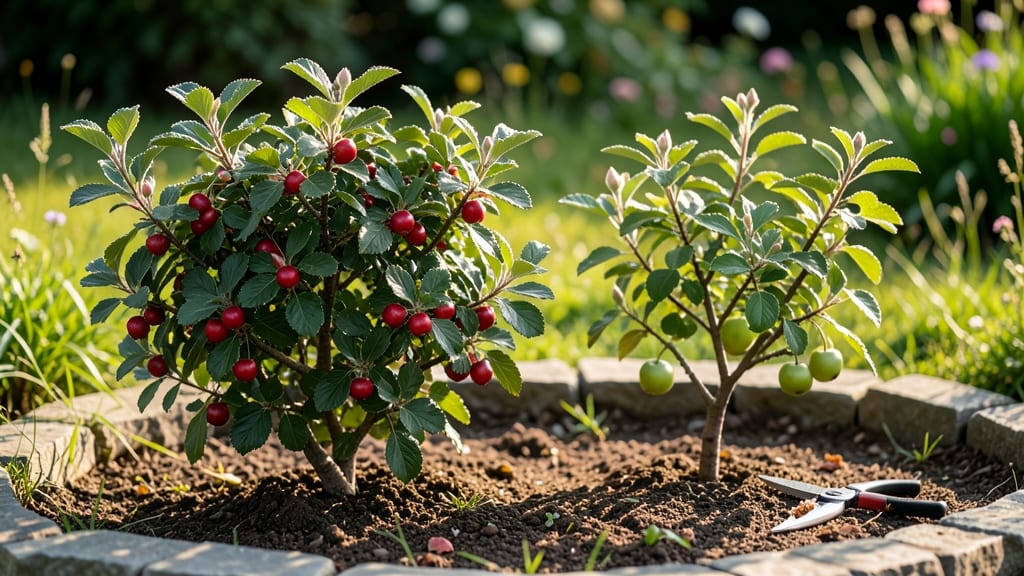
Shrub fruit trees like blueberries and currants thrive where most fruit trees freeze—because they’re built to survive subzero winters and still produce sweet, abundant harvests. I remember my first elderberry bush surviving a -20°F winter and coming back stronger than ever.
These plants aren’t just cold-hardy; they’re the backbone of a resilient, low-maintenance orchard.
The best part? They’re foolproof for beginners. Plant them in well-draining soil with 6+ hours of sun, water deeply once established, and prune just enough to keep them shaped. My currant bushes now produce pounds of fruit with almost no effort—just a yearly trim in late winter.
The berries are packed with antioxidants, and the plants double as living privacy screens.
You’ll end up with a garden that’s both productive and beautiful—think deep purple elderberries, golden raspberries, and glossy blueberry clusters. The birds might get a few, but you’ll still have more fruit than you know what to do with. Plus, these shrubs attract pollinators and keep pests at bay naturally.
Works in zones 2-7, from backyard hedges to container gardens. Once you try them, you’ll wonder why you didn’t plant more years ago. Let’s get growing—your first harvest could be just a year away.
📚 In This Guide
- What you need
- Instructions
- Tips and common mistakes
- Wrapping up and next steps
What you need
- ● Shrub fruit tree varieties: Choose cold-hardy options like Amelanchier (serviceberry), Cornus mas (dwarf cornelian cherry), Prunus padus (bird cherry), or Viburnum (arrowwood). Quantity: 1–3 plants (depending on space and pollination needs).
- ● Soil amendments: Compost (5–10 gallons per plant) 🌿
- ● Well-draining potting mix (if container-growing) 🏺
- ● Organic mulch (straw, wood chips, or pine needles) 🍂
- ● Planting supplies: Garden gloves (1 pair) 🧤
- ● Trowel or spade (for digging) 🔨
- ● Watering can or hose with a gentle nozzle 💦
- ○ Stakes (optional, for young trees in windy areas) 🌳
- ● Fertilizer: Slow-release organic fertilizer (e.g., 10-10-10 or compost tea) 🌱
- ● Pruning shears (for shaping or winter prep) ✂️
- ● Tree guards (to protect from critters) 🐿️
- ● Drip irrigation system (for consistent moisture) 💧
- ● Soil pH test kit (to ensure optimal growing conditions) 🧪
- ● Cold frame or row cover (for extending the growing season) ❄️
How to select and plant cold-hardy shrub fruit trees
These resilient varieties thrive in northern climates with minimal fuss—here’s how to get them established right.
Choose the Right Varieties for Your Zone
Northern climates favor shrub fruit trees like arctic kiwi, saskatoon berry, and honeyberry because they handle zone 3-5 temperatures with ease. Arctic kiwi, for example, produces edible berries that tolerate -40°F, while saskatoon berries thrive in sandy, poor soils where other plants fail. Check your hardiness zone—most nurseries list zone ranges on seed packets or plant tags.
Look for disease-resistant cultivars like 'Ken’s Red' honeyberry or 'Martin' saskatoon, which produce consistently without chemical treatments. I’ve found that shrub forms (multi-stemmed) outperform single-trunk trees in windy northern sites—they recover faster from storm damage and bear fruit earlier. Avoid grafted varieties unless you’re certain your zone matches the rootstock’s tolerance.
Prepare the Planting Site with Drainage in Mind
Shrub fruit trees despise soggy roots, so amend heavy clay or low spots with 3-4 inches of compost mixed into the top 12 inches of soil. Test your soil’s pH—most prefer 6.0-7.0, though saskatoon berries tolerate slightly alkaline conditions. If your soil is compacted, add coarse sand or perlite to improve drainage before planting.
Choose a location with full sun (6+ hours daily) but afternoon shade if summers run hot. I plant mine on a slight slope to prevent water pooling, especially in spring when snowmelt can drown shallow roots. Space plants 6-10 feet apart depending on mature size—arctic kiwi vines need more room than compact honeyberry bushes.
Plant at the Correct Depth and Water Thoroughly
Dig a hole twice as wide as the root ball but no deeper—planting too low suffocates roots and invites rot. Loosen the root ball if roots are circling, then position the tree so the graft union (if present) sits 2-3 inches above soil level. Backfill with native soil mixed with a handful of bone meal for phosphorus to encourage root growth.
Water immediately after planting to settle the soil, then apply 1-2 inches of mulch (wood chips or straw) around the base, keeping it 3 inches away from the trunk. Mulch retains moisture and regulates soil temperature, which is critical in northern climates where temperature swings can stress young plants. Avoid synthetic mulches—they trap too much heat.
Prune for Structure and Airflow in Early Spring
Wait until buds swell but before leaves emerge to prune—this timing minimizes stress. Remove any crossing branches or dead wood first, then open the center of the shrub to improve airflow and sunlight penetration. I cut back one-third of the oldest canes to encourage new growth, which bears more fruit. Use clean, sharp pruners to avoid tearing bark.
Shrub fruit trees fruit on one-year-old wood, so avoid heavy pruning that removes next year’s potential harvest. Label plants if you have multiple varieties—honeyberries and saskatoon berries look similar when dormant. Fertilize lightly with 10-10-10 in early spring if growth appears stunted, but shrub fruit trees rarely need supplements in healthy soil.
Tips & tricks for perfect shrub fruit tree planting
Northern climates demand smart planting strategies—here’s how to ensure your shrub fruit trees thrive from day one.
Variety Selection Matters: When choosing between arctic kiwi, saskatoon berry, and honeyberry, prioritize disease-resistant cultivars like 'Ken’s Red' honeyberry or 'Martin' saskatoon. These varieties consistently outperform others in harsh conditions, producing abundant fruit with minimal care. The multi-stemmed shrub form also proves more resilient in windy northern sites, recovering faster from storm damage than single-trunk trees. For maximum hardiness, verify the rootstock matches your zone—grafted varieties often fail when planted outside their recommended range.
Soil Preparation is Non-Negotiable: The 3-4 inches of compost mixed into the top 12 inches of soil creates the ideal foundation for shrub fruit trees. This amendment improves drainage while retaining essential moisture, which is critical in northern climates where water can pool during spring thaw. For compacted soils, add coarse sand or perlite to prevent root suffocation. Remember that saskatoon berries tolerate slightly alkaline conditions, while most varieties prefer a neutral pH of 6.0-7.0—test your soil before planting to avoid pH-related stress.
Planting Depth and Mulching Technique: Positioning the graft union 2-3 inches above soil level prevents rot while allowing flexibility for seasonal soil shifts. The bone meal mixed into the backfill provides phosphorus for robust root development, but avoid over-fertilizing—these hardy plants rarely need supplements. When applying 1-2 inches of mulch, keep it 3 inches away from the trunk to prevent moisture buildup that could invite disease. Organic mulches like wood chips or straw regulate soil temperature better than synthetic alternatives, which trap excessive heat.
Pruning Strategy for Maximum Yield: The early spring pruning window—when buds swell but leaves haven't emerged—minimizes stress while shaping the plant. Focus on removing crossing branches and dead wood first, then open the center to improve airflow. Cutting back one-third of the oldest canes stimulates new growth, which bears fruit more reliably. Always use clean, sharp pruners to avoid tearing bark, and remember these plants fruit on one-year-old wood—preserve last year's growth for next season's harvest.
Pro Tips for Shrub Fruit Trees
- Northern climates demand smart planting strategies—here’s how to ensure your shrub fruit trees thrive from day one.
- Variety Selection Matters: When choosing between arctic kiwi, saskatoon berry, and honeyberry, prioritize disease-resistant cultivars like 'Ken’s Red' honeyberry or 'Martin' saskatoon.
- Soil Preparation is Non-Negotiable: The 3-4 inches of compost mixed into the top 12 inches of soil creates the ideal foundation for shrub fruit trees.
Frequently asked questions
Got questions about shrub fruit trees? You're not alone!
Whether you're a first-time gardener or a seasoned grower, these cold-hardy varieties can be a game-changer for northern climates. Below, we’ve answered some of the most common questions to help you get started—or troubleshoot—with confidence.
What exactly are shrub fruit trees, and how are they different from regular fruit trees?
Shrub fruit trees, like amels or juneberries, are dwarf or semi-dwarf varieties that grow in multi-stemmed, bush-like forms instead of a single trunk. They’re easier to maintain, produce fruit earlier, and thrive in small spaces—perfect for northern gardens where traditional fruit trees might struggle with cold or limited room.
Can shrub fruit trees survive harsh winters in Zone 3 or 4?
Many shrub fruit trees, such as hardy kiwis (Actinidia arguta) or saskatoon berries, are bred to tolerate temperatures as low as -30°F to -40°F with proper care. Choose native or hybrid varieties labeled for your zone, and mulch heavily in fall to protect roots. Pro tip: Plant near a south-facing wall for extra winter protection!
How long does it take for shrub fruit trees to bear fruit?
Patience pays off! Most shrub fruit trees start producing fruit within 2–5 years after planting, though some faster varieties (like arctic kiwi) may bear fruit in as little as 1–2 years. Soil quality, sunlight, and watering all play a role—so give them love, and they’ll reward you sooner!
What are some low-maintenance shrub fruit tree alternatives for busy gardeners?
If you want flavor without the fuss, try:
- Saskatoon berries (Amelanchier): Drought-tolerant, pollinator-friendly, and produce sweet berries with minimal pruning.
- Hardy kiwis (Actinidia arguta): Thrive in poor soil, need little pruning, and yield tart-sweet fruit.
- Elderberries (Sambucus): Fast-growing, cold-hardy, and great for jams or syrups.
Why aren’t my shrub fruit trees producing fruit, even after a few years?
Several factors could be at play:
- Lack of pollination: Some varieties (like kiwis) need both male and female plants. Check if you’ve planted a compatible pair!
- Improper pruning: Over-pruning or cutting back too late can reduce flowering. Prune in late winter or early spring.
- Nutrient deficiencies: Test your soil—shrub fruit trees often need extra phosphorus for fruiting.
- Stress from weather: Late frosts or drought can kill blossoms. Use frost cloths if frost is a risk in your area.
Wrapping up and next steps
Shrub fruit trees are a game-changer for gardeners in northern climates—offering delicious, hardy, and low-maintenance harvests even in chilly zones! 🌱 Whether you’re drawn to the tangy sweetness of apricots, the tart crunch of plums, or the rustic charm of cherries, these compact varieties prove you don’t need a sprawling orchard to enjoy fresh fruit.
With the right care and a little patience, you’ll be savoring homegrown goodness in no time.
Ready to dive in? Start by choosing your favorite variety and sketching a simple planting plan—your future harvest (and happy neighbors!) will thank you. 🍑✨