
Pruning
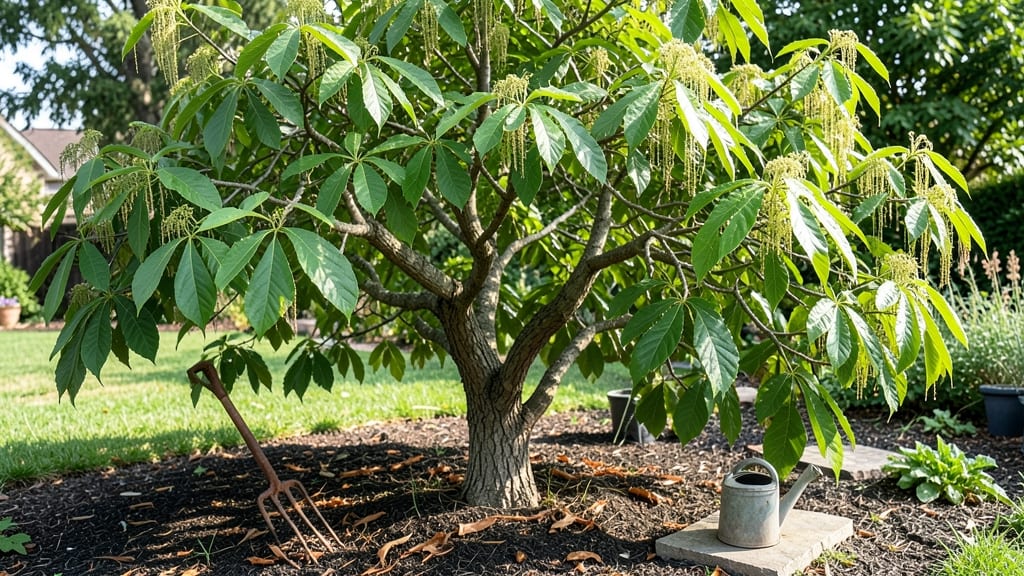
Pruning a Tree of Heaven isn’t just about shaping its wild, fast-growing branches—it’s about taming its invasive nature while unlocking lush, year-round growth. 🌿 I’ve wrestled with these trees for years, and the right cuts make all the difference between a tangled mess and a structured, thriving specimen.
The key is timing: prune in late winter or early spring to remove dead wood and shape the canopy before new growth explodes. This tree tolerates heavy pruning, so don’t fear cutting back aggressive suckers or crossing branches—just work with sharp tools and clean cuts.
Fertilize lightly in spring to encourage strong regrowth, but avoid overdoing it, as this fast grower can become unruly.
You’ll end up with a tree that stays contained, produces vibrant foliage, and even puts out fragrant summer flowers. The trade-off? Its aggressive roots and toxic sap mean gloves and caution are a must. Still, with the right approach, you can enjoy its ornamental value without the headaches.
Works for urban landscapes, parks, or even large gardens—just be prepared for its stubbornness. Here’s how to prune it like a pro without losing the battle to its invasive tendencies.
📚 In This Guide
- What you need
- Instructions
- Tips and common mistakes
- Wrapping up and next steps
What you need
- ● Pruning shears: Bypass pruners (for cuts under ½ inch thick); 2-3 pairs recommended for efficiency.
- ● Loppers: For branches ½ to 2 inches thick; 1 pair with a 6–8 inch blade for leverage.
- ● Pruning saw: For thick branches 2+ inches; bow saw or folding pruning saw with sharp, fine teeth.
- ● Extension pole: 10–15 ft telescoping pole with saw attachment (for high branches).
- ● Disposable gloves: 2–3 pairs (nitrile-coated for grip and protection from sap/toxins).
- ● Rubbing alcohol or bleach solution: 70% isopropyl alcohol or 1:10 bleach-water mix to sterilize tools between cuts.
- ● Heavy-duty trash bags: 3–5 bags (Tree of Heaven debris can be invasive—seal and dispose properly!).
- ● Ladder (if needed): Sturdy, extendable ladder (20–30 ft) with non-slip feet; never stand on top rungs.
- ● Hand saw: For emergency cuts if your pruning saw fails.
- ● Tree wound dressing: Pruning sealant (controversial but useful for large cuts; skip for small trims).
- ● Work gloves with cuffs: For extra protection if working near thorns.
- ● Safety glasses: To shield eyes from debris.
- ● Marking spray: Non-toxic paint to tag branches for removal before cutting.
- ● First-aid kit: In case of sap irritation (Tree of Heaven can cause skin rashes).
- ● Check local regulations: Some areas restrict pruning invasive species like Tree of Heaven—verify before removing large branches.
- ● Timing matters: Prune in late winter/early spring (dormant season) for best results. Avoid heavy pruning in fall.
- ● Safety first: Wear long sleeves/pants to avoid sap contact. Never prune near power lines!
- ● Sharpen tools: Dull blades tear wood, inviting disease. Hone shears/saws before starting.
Step-by-Step guide to pruning tree of Heaven for year-round health
Here's how I keep this fast-growing tree under control—without sacrificing its dramatic beauty.
🌿 Step 1: Assess Growth Patterns in Early Spring
Start your pruning in late winter or early spring, just before new growth begins. The tree of heaven's aggressive growth makes timing critical—wait too long, and you'll be playing catch-up all season. Look for branches that cross or rub against each other; these are your first targets. I also scan for dead or diseased wood—it's usually easy to spot as brown, brittle stems that snap when bent.
Use your fingers to test branch flexibility. Healthy wood should bend slightly before snapping, while weak branches will break with minimal pressure. Make a mental note of any branches growing toward the center of the tree—these compete for sunlight and should be removed. The goal here is to open up the canopy and improve air circulation, which prevents future disease issues.
✂️ Step 2: Make Clean Cuts at the Right Angle
Always use sharp, clean pruning shears or a pruning saw for branches thicker than ½ inch. I find that dull tools crush the wood, creating larger wounds that take longer to heal. Cut just outside the branch collar—the raised area where the branch meets the trunk. This ensures the tree can seal the wound properly and prevents unsightly stubs.
Make your cuts at a 45-degree angle about ¼ inch above an outward-facing bud. This angled cut helps rainwater run off rather than pool in the wound. For larger branches, I make a second cut underneath to control the branch's fall, then a final cut to remove it completely. Never leave stubs—this invites rot and weakens the tree's structure.
☀️ Step 3: Thin the Canopy for Light Penetration
Tree of heaven grows best when its branches receive plenty of sunlight. Aim to remove 20-30% of the tree's foliage to improve light penetration to the lower branches. Start at the top and work your way down, removing the smallest branches first. These branches often grow vertically and compete with the main leaders for dominance.
Watch for branches that grow straight up—they're called "water sprouts" and rarely produce leaves. These can be removed entirely. For horizontal branches, I like to keep the ones that form a natural, rounded shape. After thinning, step back and visualize the tree's silhouette—you should see an open, airy structure that lets light reach all levels.
🌱 Step 4: Maintain Through the Growing Season
Light pruning can continue throughout the growing season to control shape and remove any new water sprouts. I make it a habit to check the tree every 4-6 weeks during the warm months. Remove any suckers that sprout from the base or roots—these drain energy from the main trunk.
In late summer, I do a final check for any branches that grew too vigorously during the season. These often appear as long, thin shoots with sparse foliage. Cut them back to a strong lateral branch or bud. Avoid heavy pruning after mid-summer, as new growth won't have time to harden off before winter.
⏰ Step 5: Prepare for Winter Dormancy
As temperatures drop below 40°F, the tree of heaven enters dormancy. This is the perfect time for any remaining structural pruning. Remove any dead, broken, or crossing branches that might have been missed earlier. I also look for any branches that grew in awkward directions during the season and adjust them now.
After pruning, I apply a thin layer of mulch around the base of the tree to protect the roots from freezing temperatures. Keep the mulch 2-3 inches deep and maintain a 3-inch gap between the mulch and the trunk to prevent rot. This final step ensures your tree of heaven will burst back to life with strong, healthy growth in the spring.
Tips & tricks for pruning tree of Heaven
These simple strategies will help you maintain your tree's health while keeping its dramatic shape intact.
Timing is Everything: The late winter or early spring timing in Step 1 is crucial because this aggressive grower starts pushing new shoots immediately. If you prune too early, you risk cutting off next year's growth. I've learned the hard way—wait until just before you see buds swelling on the branches. This gives you that perfect window where you can remove last year's growth without harming new development.
Tool Sharpness Matters: In Step 2, when working with branches thicker than ½ inch, your tools should be sharper than you think. I've ruined perfectly good cuts with dull shears that crush the bark instead of making clean incisions. Test your tools by making a clean cut through a small twig—if it tears rather than slices, sharpen them first. A clean cut heals faster and looks more professional.
Visualize the Canopy: Step 3's 20-30% thinning guideline can be tricky to visualize. I've found it helpful to step back about 10 feet from the tree and look at its silhouette. Imagine removing every other branch—this creates that open, airy structure we want. For water sprouts, think of them as vertical arrows pointing straight up; these rarely contribute to the tree's beauty and can be removed entirely without harm.
Seasonal Maintenance Strategy: The 4-6 week checks in Step 4 are perfect for catching problems early. I set a phone reminder for every other month during growing season. This consistent monitoring prevents small issues from becoming major problems. In late summer, I look for those long, thin shoots with sparse foliage—they're the tree's way of saying "I need help!" Cutting them back to a strong lateral branch redirects energy to where it's needed most.
Pro Tips for Tree Of Heaven
- These simple strategies will help you maintain your tree's health while keeping its dramatic shape intact.
- Timing is Everything: The late winter or early spring timing in Step 1 is crucial because this aggressive grower starts pushing new shoots immediately.
- Tool Sharpness Matters: In Step 2, when working with branches thicker than ½ inch, your tools should be sharper than you think.
Frequently asked questions
Got questions about pruning your Tree of Heaven (Ailanthus altissima)? You’re not alone! Here are some of the most common queries—plus quick, actionable answers to keep your tree thriving.
When is the best time to prune a Tree of Heaven?
The ideal window is late winter or early spring (before new growth starts) to avoid stressing the tree. However, light pruning for safety or aesthetics can be done year-round. Just avoid heavy cuts in summer or fall, as this can encourage weak, disease-prone regrowth.
Why does my Tree of Heaven keep sprouting suckers after pruning?
This aggressive regrowth is totally normal—Tree of Heaven is a sucker king! To control it, prune suckers immediately (they’ll return if left unchecked). For stubborn cases, apply a horticultural vinegar spray (5% acetic acid) to the cut stump to discourage regrowth. Consistency is key!
How do I prune dead or diseased branches safely?
Use sterilized pruners (rubbing alcohol or bleach wipe) to cut just outside the branch collar (the swollen area where the branch meets the trunk). For large branches, make a 3-cut technique: undercut, top cut, and finish cut. Never leave stubs—this invites decay.
Are there alternatives to Tree of Heaven for fast-growing shade?
If you’re concerned about invasiveness, try Mimosa (fast-growing but less aggressive) or Black Walnut (slower but pest-resistant). For urban areas, Silver Maple or London Planetree offer similar shade with fewer drawbacks. Always check local regulations before planting!
Pro Tip: Mulch heavily after pruning to reduce stress and suppress suckers. A 3-inch layer of wood chips or shredded bark works wonders!
Wrapping up and next steps
The Tree of Heavenstrong> may seem like a fast-growing challenge, but with the right pruning techniques, you can transform it into a stronger, healthier, and more manageable addition to your landscape.
Whether you’re tackling spring blooms, summer growth spurts, or winter maintenance, consistency is key—a little effort now saves big headaches later! 🌿
Ready to take control? Start small: Pick one season to practice your skills, then gradually expand your approach. Before you know it, your Tree of Heaven will be thriving and looking its best—no invasive takeover in sight! 🌱✨
Your green thumb is closer than you think—grab those shears and get pruning!