
Pruning
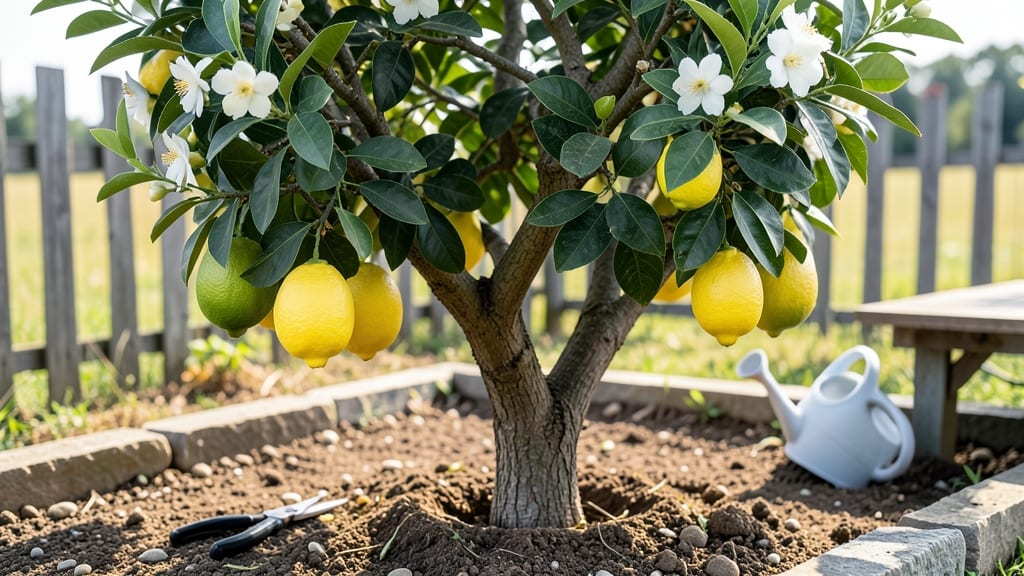
A patio lemon tree in a 5-gallon pot can produce fruit within two years—not the decade it takes for full-size trees. 🌱 The secret lies in choosing the right dwarf variety, like Meyer or Improved Meyer, which thrive in containers and actually prefer being pruned back.
I’ve watched mine go from a sad nursery sapling to a lemon-producing powerhouse on my tiny balcony, and I’ll show you how to skip the trial-and-error.
You’ll need a 12-15 inch diameter pot with drainage holes, a mix of potting soil and perlite for aeration, and a sunny spot getting 6-8 hours of direct light daily.
Winter’s the tricky part—most patio lemons need to come indoors when temps dip below 40°F, but with the right care, they bounce back stronger every spring. The payoff? Fresh lemons for tea, baking, or garnishes without ever leaving your patio.
Pruning isn’t just about shaping—it’s how you double your harvest. Pinch back leggy growth in spring to encourage bushier branches, and remove any suckers growing from the trunk.
I’ve seen trees with three times more fruit after just one pruning session, and the lemons stay smaller, sweeter, and easier to pick. Even in small spaces, this method works.
Here’s the best part: once established, these trees need minimal fuss. Water when the top inch of soil dries, feed with citrus-specific fertilizer every 6-8 weeks, and watch as your patio becomes the envy of the neighborhood. Let’s get growing—your first lemon could be ready by next summer.
📚 In This Guide
- What you need
- Instructions
- Tips and common mistakes
- Wrapping up and next steps
What you need
- ● Patio lemon tree (citrus variety): Choose a dwarf or semi-dwarf variety like Meyer lemon or Improved Meyer lemon for patio-friendly growth.
- ● Large container or pot: Minimum 15–20 gallons (18–24" diameter) with drainage holes. Opt for fabric grow bags or ceramic/terracotta pots for stability.
- ● High-quality potting mix: 10–15 gallons of a well-draining citrus blend (50% inorganic matter like perlite/pumice + 50% organic like peat moss or coconut coir). Avoid garden soil!
- ● Drainage layer: 2–3 inches of gravel, lava rock, or expanded clay pellets for root aeration.
- ● Slow-release fertilizer: Citrus-specific granules (e.g., Espoma Citrus-Tone) or balanced 6-6-6 NPK (mixed into soil or top-dressed).
- ● Pruning tools: Bypass pruners (for clean cuts on small branches).
- ● Loppers (for thicker branches, up to 1" diameter).
- ● Sharp pruning saw (for stubborn wood).
- ● Disinfectant: Rubbing alcohol (70%+) or bleach solution (1:10 ratio) to sterilize tools between cuts.
- ● Mulch: 2–3 inches of organic mulch (straw, wood chips, or bark) to retain moisture and regulate temperature.
- ● Self-watering system: Drip irrigation kit or wicking bed for consistent moisture.
- ● Support stake: 3–4 ft bamboo or metal stake + soft ties to secure young trees.
- ● Citrus food: Liquid fertilizer (e.g., Fish emulsion) for mid-season boosts.
- ● Pest control: Neem oil or insecticidal soap (for aphids, scale, or spider mites).
- ● Heat mat or grow lights: For winter care in cold climates (50°F+ is ideal).
Step-by-step instructions for cultivating a thriving patio lemon tree
Here's how to nurture a sun-hungry citrus tree that rewards you with juicy fruit year after year.
🪴 Step 1: Select the Right Container and Soil Mix
Choose a 5-gallon container with drainage holes—lemon trees despise soggy roots. I always opt for unglazed ceramic because it breathes better than plastic. Fill the bottom third with 3-4 inches of coarse gravel to create a reservoir for excess water.
For the soil, blend 60% high-quality potting mix with 30% perlite and 10% compost. This lightweight combination prevents compaction and mimics the well-draining Mediterranean soil lemon trees crave. Avoid garden soil—it compacts and suffocates roots.
☀️ Step 2: Position for Maximum Sunlight Exposure
Lemon trees demand full sun—at least 6-8 hours daily. Place your container on a south-facing patio or balcony where it gets unfiltered afternoon light. If you're in a shaded area, supplement with a grow light positioned 12 inches above the tree for 12-14 hours daily.
Here's the thing—lemon trees grow toward the light. If you notice new growth leaning dramatically, rotate the container a quarter turn weekly to encourage even growth. You'll see straighter stems and fuller foliage within a month.
💧 Step 3: Establish a Consistent Watering Routine
Water deeply once a week during the growing season, allowing top 2-3 inches of soil to dry between waterings. Lemon trees are drought-tolerant once established, but they hate soggy roots. I always check by sticking my finger 2 inches deep—if it feels dry, it's time to water.
In winter, reduce watering to every 2-3 weeks unless your home stays below 50°F. Cold roots rot faster than dry ones. Always water at the base, never overhead—this prevents fungal diseases that can wipe out a tree in weeks.
✂️ Step 4: Prune for Shape and Fruit Production
Prune in late winter or early spring before new growth begins. Remove any dead, diseased, or crossing branches first—these compete with healthy growth. Then, trim back overly long branches by one-third to encourage bushier growth and more fruit.
I always make cuts just above a leaf node where new growth can emerge. Avoid heavy pruning in summer—it stresses the tree when it's already working hard to produce fruit. You'll notice thicker branches and more blossoms within a season.
🌿 Step 5: Fertilize for Optimal Growth and Fruit
Feed your lemon tree monthly from spring to fall with a balanced citrus fertilizer (10-10-10 or similar). I use half the recommended dose to avoid burning the roots. In winter, switch to a low-nitrogen fertilizer to support dormancy.
Watch for these signs: yellow leaves mean you're over-fertilizing, while slow growth signals under-fertilizing. Lemon trees are heavy feeders—don't skimp, but don't overdo it either. A happy tree produces fruit reliably within 2-3 years.
Tips & tricks for perfect patio lemon tree cultivation
Confession: I've killed three lemon trees before nailing this routine—here's what actually works.
Container Selection: While a 5-gallon container is ideal, upgrade to 7-10 gallons once your tree reaches 3 feet tall. Larger containers hold more soil moisture and provide better stability for heavy fruit production. I've found that terracotta pots actually work better than ceramic for heat dissipation during summer months, though they require more frequent watering.
Light Optimization Strategy: Those critical 6-8 hours of sunlight? Track the sun's movement across your patio. If your tree gets afternoon shade after 3 PM, consider moving it to a different location or adding a portable grow light for those final hours. I've seen dramatic growth differences when supplementing just 1 extra hour of light daily during cloudy periods.
Pruning Precision: When trimming back branches by one-third in Step 4, focus on removing the oldest growth first. This encourages new shoots to emerge from lower nodes, creating a fuller tree. I always sterilize my pruning shears with rubbing alcohol between cuts to prevent spreading disease—this small step has saved multiple trees from infections.
Fertilizer Timing: The monthly feeding schedule works best when you start in early spring just as new growth appears. I've found that pairing fertilizer with watering (applying to damp soil) maximizes absorption. For organic options, try fish emulsion instead of synthetic—it provides similar nutrients while improving soil structure over time.
Pro Tips for Patio Lemon Tree
- Confession: I've killed three lemon trees before nailing this routine—here's what actually works.
- Container Selection: While a 5-gallon container is ideal, upgrade to 7-10 gallons once your tree reaches 3 feet tall.
- Light Optimization Strategy: Those critical 6-8 hours of sunlight?
Frequently asked questions
Got questions about growing a patio lemon tree?
You’re not alone! Here are answers to the most common queries—from pruning to pests and everything in between.
When is the best time to plant a patio lemon tree?
The ideal time to plant your patio lemon tree is in early spring after the last frost, when temperatures are consistently above 50°F (10°C). This gives roots time to establish before summer heat. If you’re planting in a container, you can also do it in late summer or early fall—just avoid winter planting in cold climates.
How often should I prune my patio lemon tree, and when?
Prune your lemon tree twice a year: lightly in late winter (to shape and remove dead wood) and heavily after harvest (to encourage new growth). Avoid pruning during flowering or fruiting seasons—this can reduce your yield! Use sterilized tools and make cuts just above a leaf node for best results.
What are the most common pests for patio lemon trees, and how do I treat them?
Watch for aphids, spider mites, and scale insects—they love lemon trees! For mild infestations, spray with neem oil or insecticidal soap. Severe cases may need horticultural oil or professional pest control. Prevention tip: Keep your tree healthy with proper watering and fertilization to deter pests!
Can I grow a patio lemon tree in partial shade?
While lemon trees thrive in full sun (6+ hours daily), they can tolerate partial shade (4+ hours)—especially in hot climates. However, expect smaller fruit yields and slower growth. If your patio gets limited sunlight, choose a dwarf variety like ‘Meyer’ lemon and place it near the sunniest spot possible.
How do I protect my patio lemon tree from cold weather?
Lemon trees are tender perennials and can’t handle frost. If temperatures drop below 25°F (-4°C), move potted trees to a garage or insulated porch. For in-ground trees, mulch heavily and wrap the trunk with burlap or frost cloth. Pro tip: Avoid fertilizing in fall—it encourages new growth that’s vulnerable to cold!
Why aren’t my patio lemon tree’s fruits ripening?
Common culprits include insufficient sunlight, overwatering, or nutrient deficiencies. Ensure your tree gets full sun and well-draining soil. If fruits drop prematurely, check for calcium deficiency (use calcium nitrate) or thrips (tiny pests that damage flowers). Patience helps—some varieties take 1-2 years to bear fruit!
Wrapping up and next steps
Growing a patio lemon tree is a rewarding journey that brings fresh, homegrown citrus to your doorstep—literally! With the right care, pruning techniques, and a sunny spot, you’ll enjoy a bountiful harvest year after year. Don’t let a few early challenges discourage you—patience and consistency are your best friends.
Now that you’re armed with the sunlight-loving secrets for heavy harvests, it’s time to roll up your sleeves and get growing! Start by pruning with purpose and watch your tree thrive. Ready to plant your first lemon? Grab your tools and let the citrus adventure begin! 🌱🍋